
Sheet Metal Fabrication Design Engineering Project management Assembly Rapid Prototyping Packaging Shipping & Delivery
CNC Machining Design Engineering Project management Assembly Rapid Prototyping Packaging Shipping & Delivery
Plastic Injection Molding Design Engineering Project management Assembly Rapid Prototyping Packaging Shipping & Delivery
Buyer’s Guide | STARWAY MFG GROUP
By Alyssa / November 2026
For OEM engineers and buyers in North America, Europe and Australia who are collecting sheet metal fabrication quotes from China.
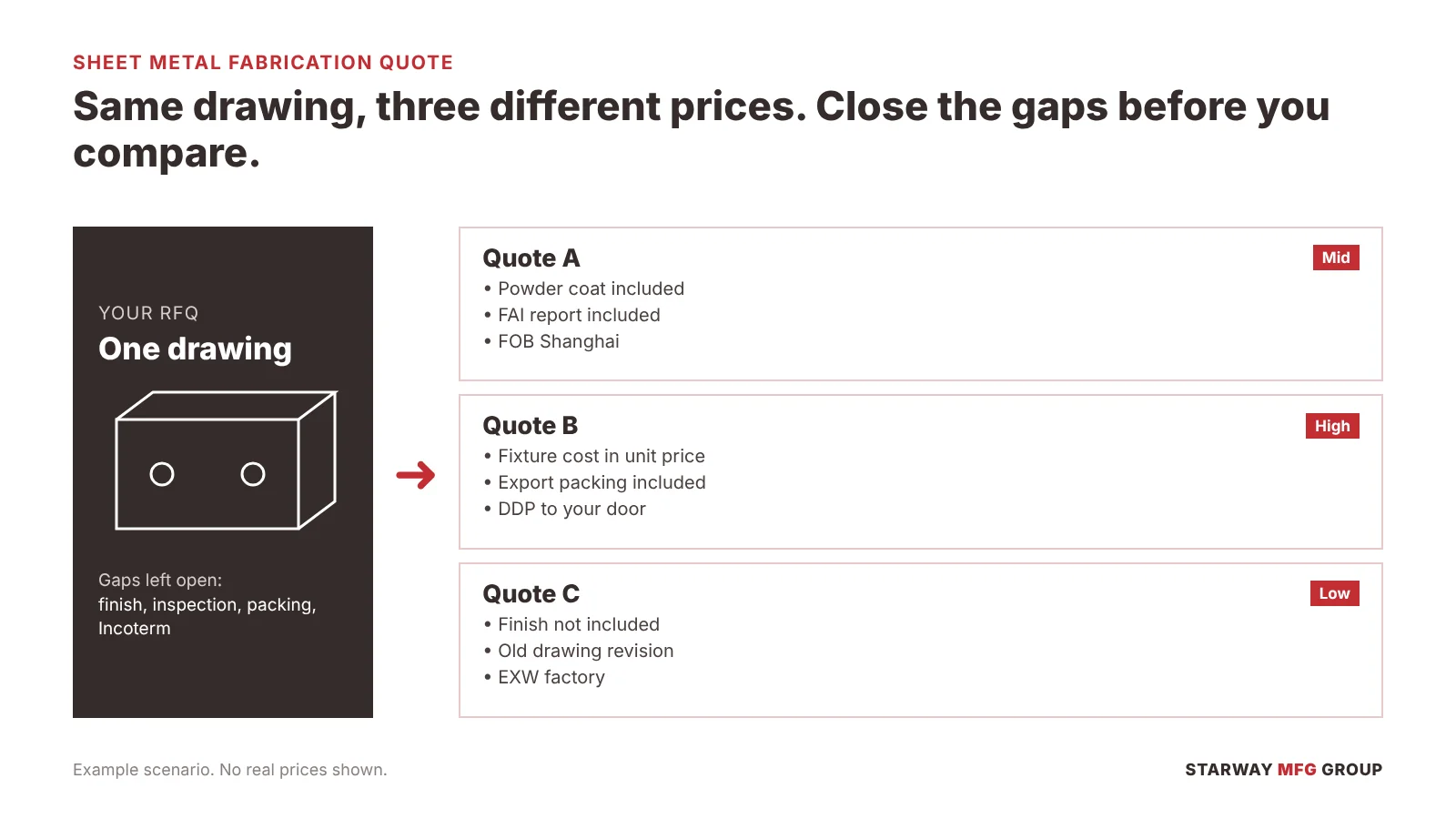
Figure 1. One drawing, three quotes: the gaps in an RFQ decide how far the prices drift apart.
Contents
You send the same enclosure drawing to three fabricators. The first sheet metal fabrication quote comes back with a tidy unit price. The second is nearly double. The third adds a tooling charge the other two never mentioned. Which one is right?
Often all three are, for the job each of them imagined. Every shop filled the gaps in your RFQ with its own assumptions: a different material grade, a different coating spec, more or less inspection, different packing, a different delivery term. Before the numbers mean anything, you have to get everyone pricing the same part.
This guide covers both halves of that work. First, how to write a sheet metal RFQ that gets comparable answers. Then, how to read, normalize and question the quotes that come back. Still building your shortlist? Start with our guide on how to evaluate and qualify a sheet metal fabrication supplier in China.
I’ve read a lot of RFQs from the fabricator’s side of the table. The quotes that cause trouble later are rarely the high ones. They’re the ones built on a guess. At STARWAY MFG GROUP, our sheet metal fabrication engineers send DFM questions with the quotation, so the assumptions are written down before anyone compares prices.
Because every RFQ leaves something open, and each shop fills the gap differently. The supplier with the most questions often isn’t the most expensive one. It’s the one that noticed what you didn’t specify. To get quotes you can actually compare:
RFQ stands for request for quotation. For a fabricated part, though, it’s really a request for a process plan. The shop can only price what it can see. Anything you leave out, it will guess.
| RFQ item | Why it changes the price | What happens if it’s missing |
|---|---|---|
| 2D drawing + 3D model (STEP) | Defines the flat pattern, bend count and hole features | The shop redraws or guesses features; revision mix-ups |
| Drawing revision level | Ties every quote to one design | Quotes from different revisions end up side by side |
| Material grade and thickness | Raw material is often the largest single cost line | “Stainless” quoted as 304 by one shop and 316 by another |
| Finish spec (type, color, texture, masking) | Coating, plating and masking add steps and batches | Powder coat, wet paint and zinc plating mixed in one comparison |
| Critical dimensions and inspection needs | Drives fixtures, inspection time and reports | Every tolerance priced as if it were critical |
| Hardware (PEM nuts, studs, standoffs) | Part numbers, purchasing and insertion labor | Generic hardware substituted without asking |
| Annual volume and first batch size | Sets setup amortization and the process route | Prototype pricing used for production, or the reverse |
| Packing spec and Incoterm | Export packing, protection and freight scope | An EXW price compared with a DDP price |
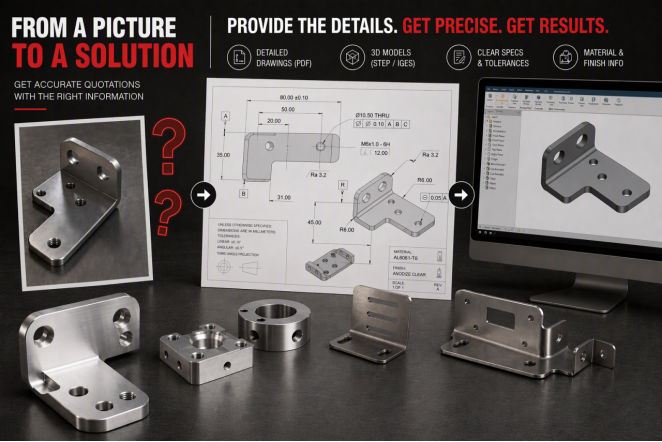
Put all of this in one PDF or a short spec sheet. Don’t scatter it across six emails. If the part is an assembly, attach the BOM and say which items you’ll supply and which the fabricator should buy.
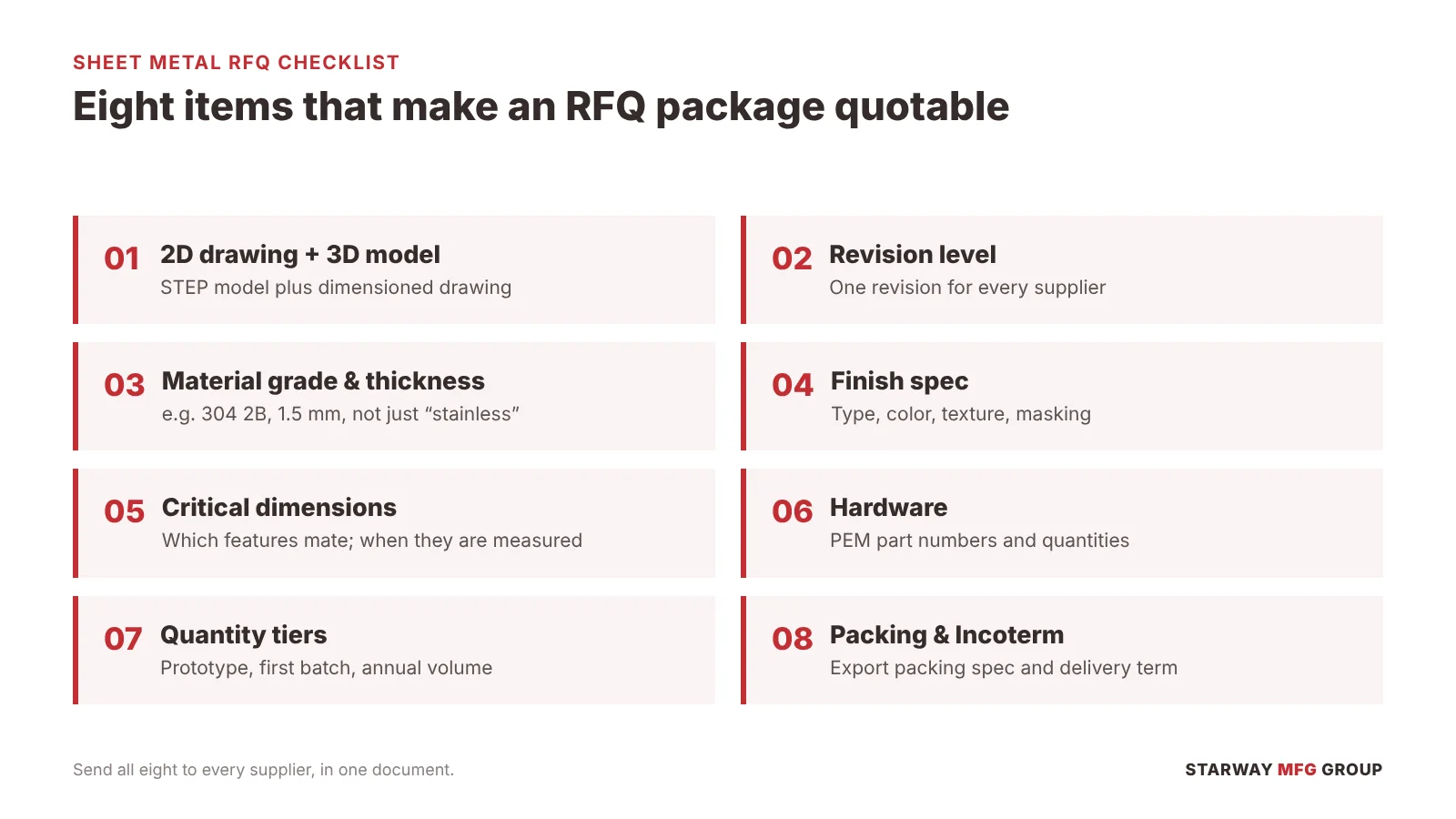
Figure 2. The eight items that make an RFQ package quotable.
Some lines on a drawing cost far more than they look. Check these before the RFQ goes out.
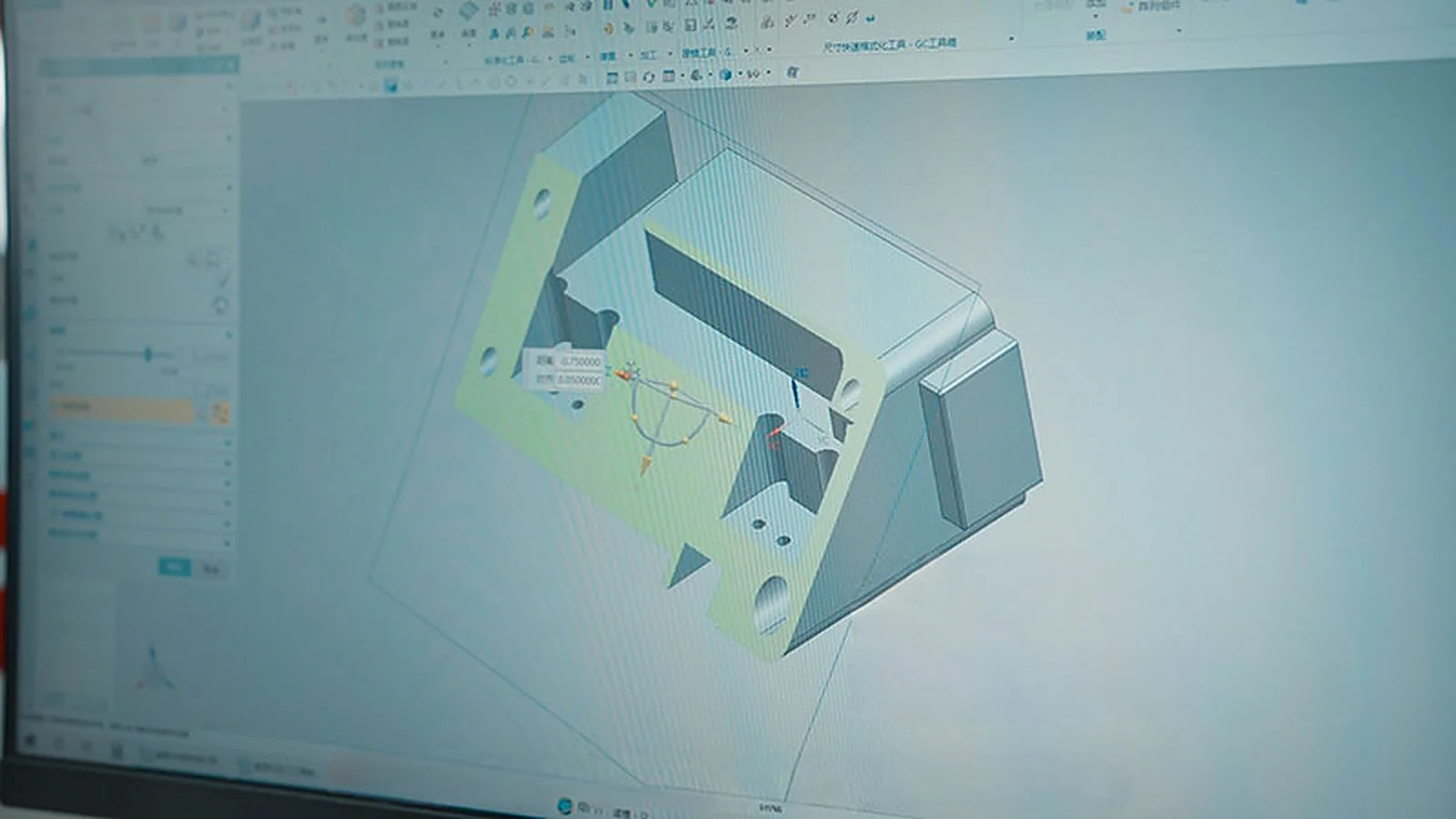
Figure 3. Reviewing the 3D model and checking key features before the quote is prepared.
A title-block tolerance of ±0.1 mm on a 600 mm bent panel tells the shop that every dimension is critical. So they price extra inspection, slower bending and some scrap. Keep tight tolerances on the features that mate with something. Let the rest follow a general tolerance standard such as ISO 2768. (These figures are typical industry examples, not a STARWAY specification.)
Is the dimension checked before powder coating or after? Before welding or after? A post-weld flatness callout on a large frame can mean dedicated fixtures, straightening and extra checks. Say which state the tolerance applies to, or two suppliers will quote two different jobs.
“No scratches” on every face means protective film, gloves, separators and slower handling. Mark which faces are cosmetic. Otherwise one shop protects everything and charges for it, and another protects nothing.
Ask for two or three tiers, say a prototype lot, a first batch and your annual run rate. Laser programming, press-brake setup and fixtures get spread across the batch, so the unit price drops as quantity rises. One tier hides that curve.
Most fabricators build a sheet metal fabrication quote from the same blocks. Know the blocks and you know what to ask for, and what’s missing when a quote looks thin.
| Cost element | What drives it | How the buyer can influence it |
|---|---|---|
| Material | Grade, thickness, nesting yield, market price | Use standard grades and gauges; avoid shapes that nest poorly |
| Cutting | Cut length, pierce count, thickness | Remove non-functional cutouts and tiny features |
| Bending and forming | Number of bends, tool changes, part size | Standardize bend radii; avoid bends that need special tooling |
| Welding and grinding | Weld length, fixtures, cosmetic grinding | Use tabs or hardware where welds aren’t structural; define the weld finish you need |
| Hardware insertion | Number and type of PEM fasteners | Consolidate sizes; specify hardware only where it’s needed |
| Finishing | Coating type, masking, color changes, batch size | Use standard colors; minimize masked areas |
| Inspection and documents | FAI, dimensional reports, sampling level | Tie report scope to the critical features |
| Packing and logistics | Export packing, surface protection, Incoterm | Agree on a packing spec before the quote |
| NRE, fixtures and tooling | One-time fixtures, special punches, programming | Ask for it as a separate line |
*Cost drivers are general industry observations, not STARWAY pricing. Actual quotes depend on the part, quantity and specifications and are for reference only.
On a simple flat bracket, material can be most of the price. On a welded, coated enclosure with twenty PEM nuts, labor and finishing take over. That’s why no single percentage rule fits every part, and why you want the breakdown rather than one number.
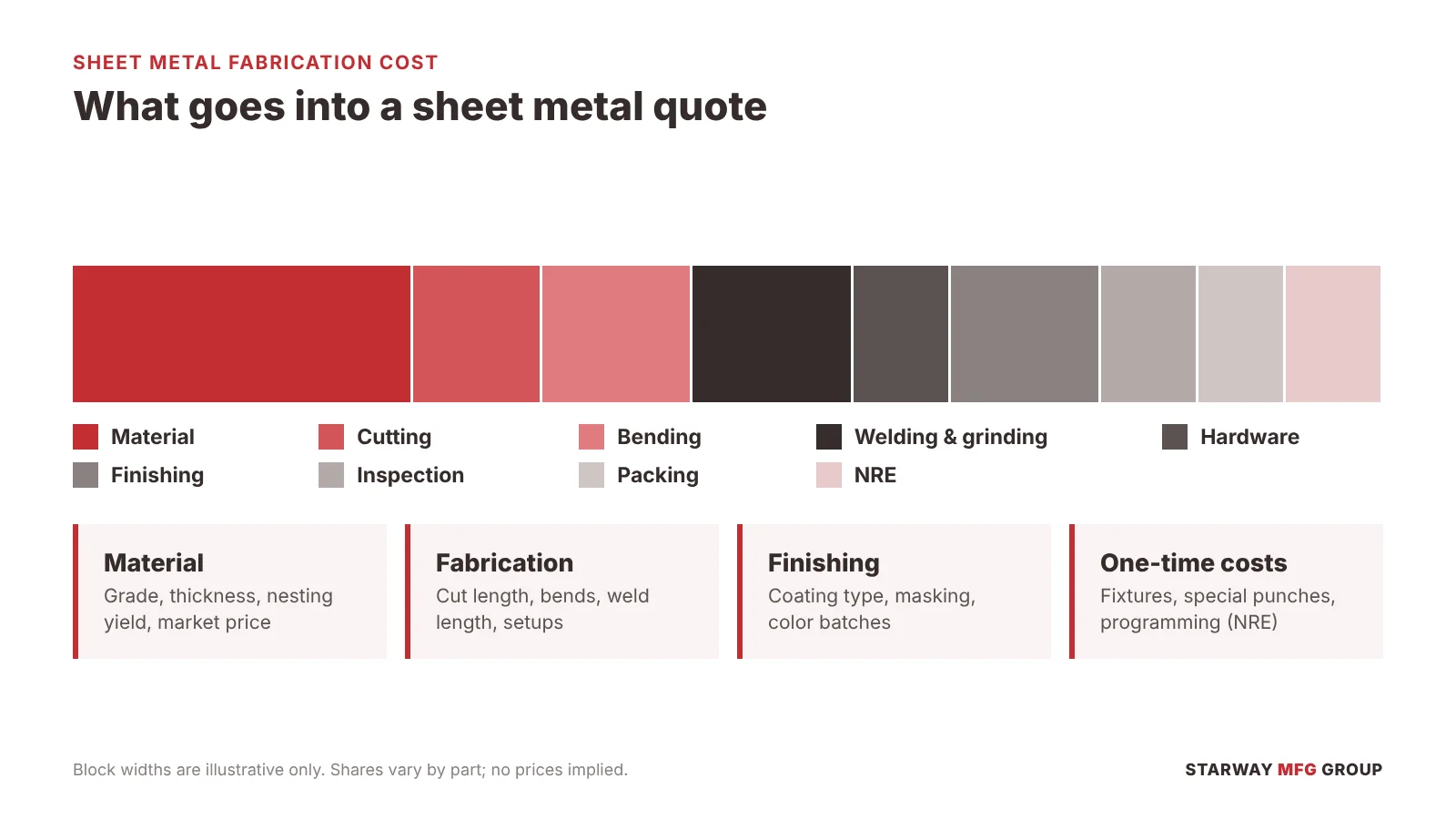
Figure 4. Typical cost elements in a sheet metal quote. Shares vary by part; no prices implied.
Once the quotes are in, put them in one spreadsheet. Then make them comparable, line by line:
| Line item | Supplier A | Supplier B | Supplier C |
|---|---|---|---|
| Drawing revision quoted | Rev C | Rev C | Rev B ⚠ |
| Material | 304 2B, 1.5 mm | 304 2B, 1.5 mm | “Stainless” ⚠ |
| Finish | Powder coat, RAL 9005, texture | Powder coat, RAL 9005, texture | Not included ⚠ |
| NRE / fixtures | Listed separately | Included in unit price | Not mentioned ⚠ |
| Inspection report | FAI + critical dimensions | FAI | Not stated ⚠ |
| Packing | Export carton + pallet | Export carton + pallet | Standard carton |
| Incoterm | FOB Shanghai | EXW | DDP |
| Quote validity | 30 days | 15 days | Not stated |
Supplier C may well show the lowest number. Look at the gaps, though. Old revision, no finish, no NRE line. That’s not a lower price for your part. It’s a price for a different part.
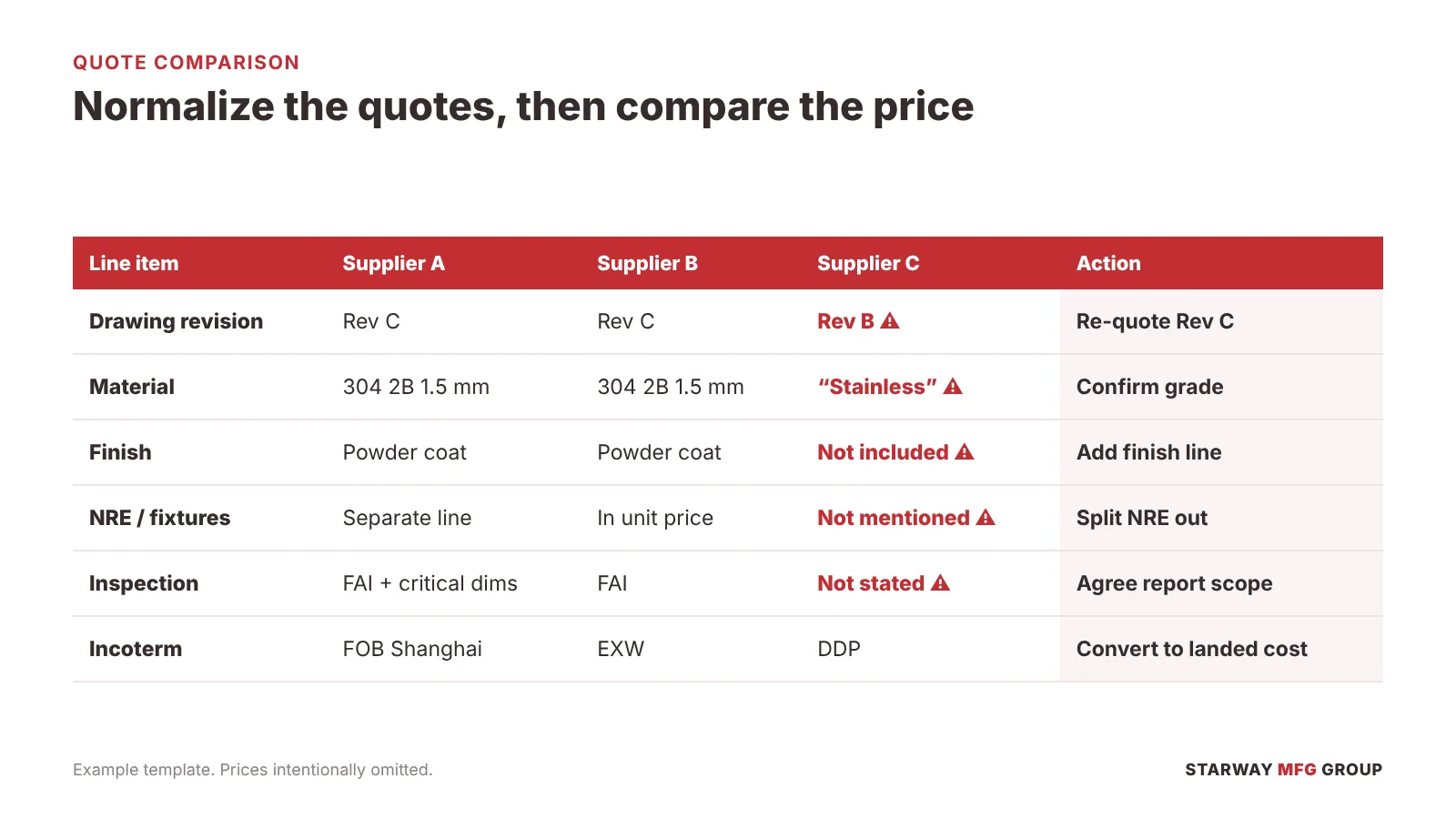
Figure 5. Normalize revision, scope, NRE and delivery term before ranking quotes.
Under the Incoterms® rules published by the ICC, EXW means you take over at the factory door: export clearance, trucking, ocean or air freight, import duties. FOB means the supplier clears the goods for export and loads them at the named port. DDP means the supplier delivers to your address with duties paid. A DDP quote will always look higher than an EXW quote for the same part. Convert everything to one term, or better, to your landed cost, before you rank anyone.
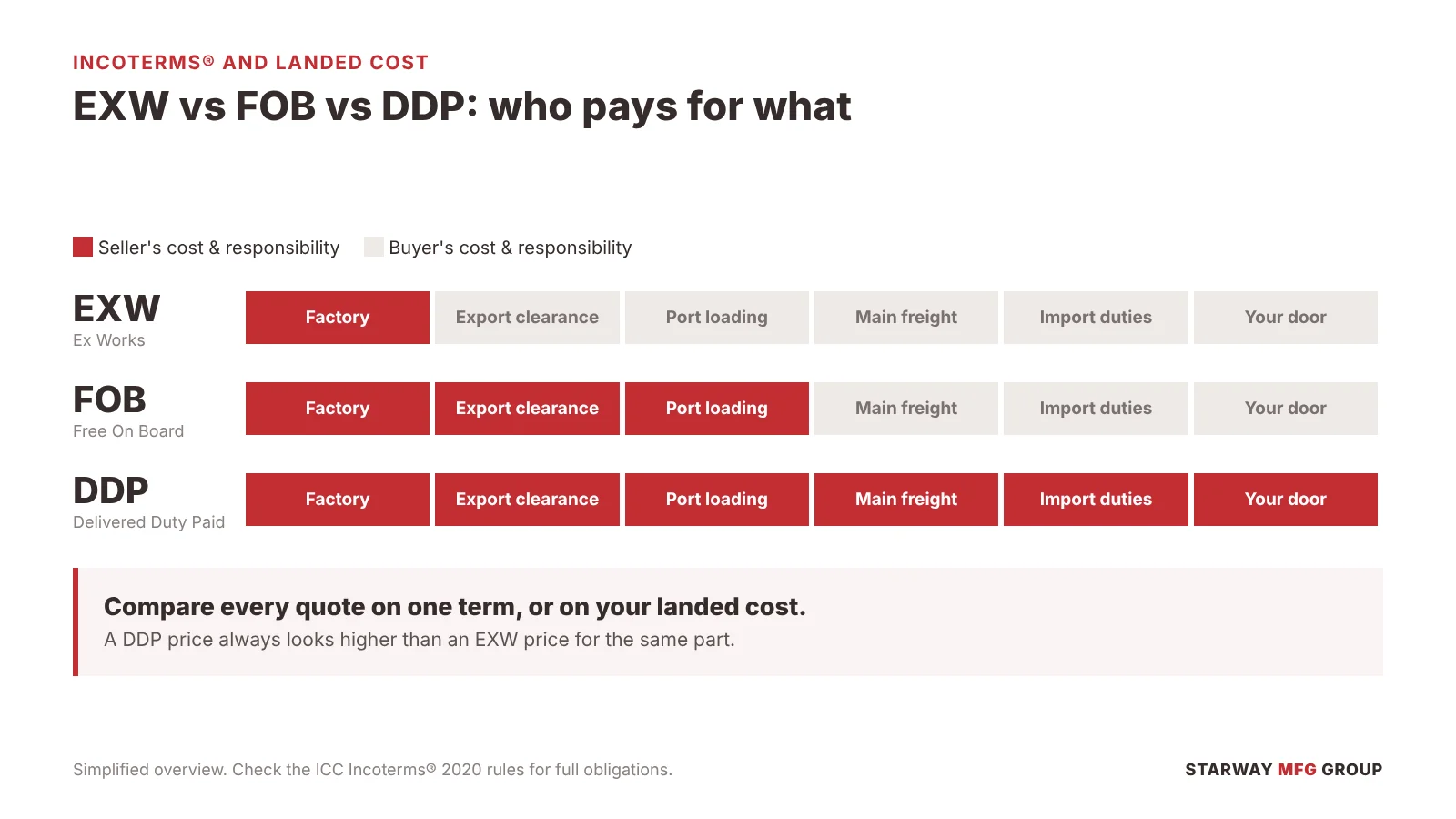
Figure 6. Where cost and responsibility pass to the buyer under EXW, FOB and DDP.
The conditions under the price table matter as much as the price. Look for:
None of these is a problem on its own. The problem is finding out about them after the PO is signed.
Copy these into your reply to each shortlisted supplier. Their answers fill the holes the quote left.
These are about the quote itself. For warning signs about the supplier, such as capability gaps or a quality system that only exists on paper, see our guide on how to evaluate and qualify a sheet metal supplier in China.
A low sheet metal fabrication quote can turn into the expensive option once the parts land. The costs just show up somewhere else:
So add a line for risk when you compare. A supplier that writes its assumptions down up front usually costs less over a program than one that’s cheap on paper.
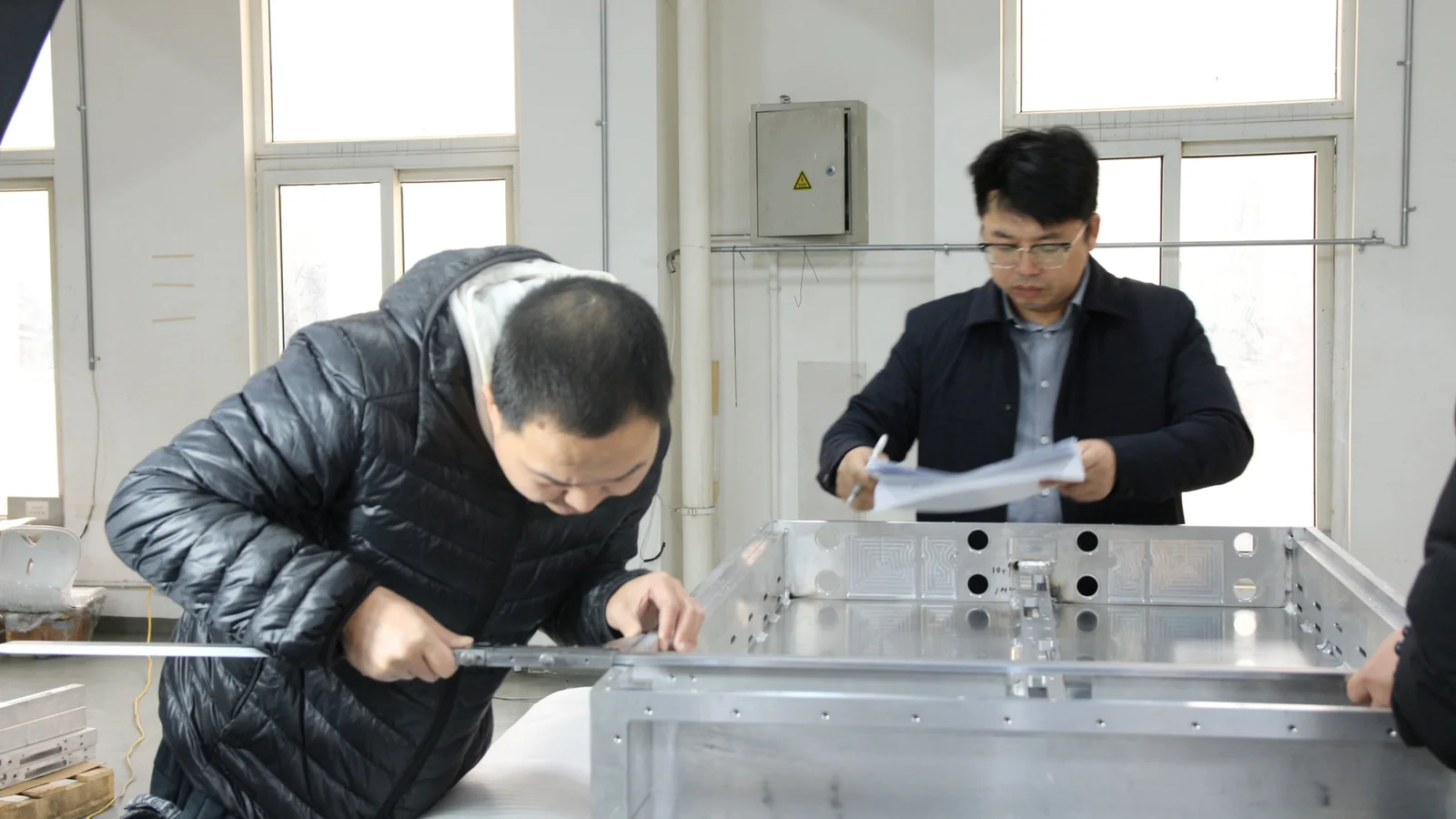
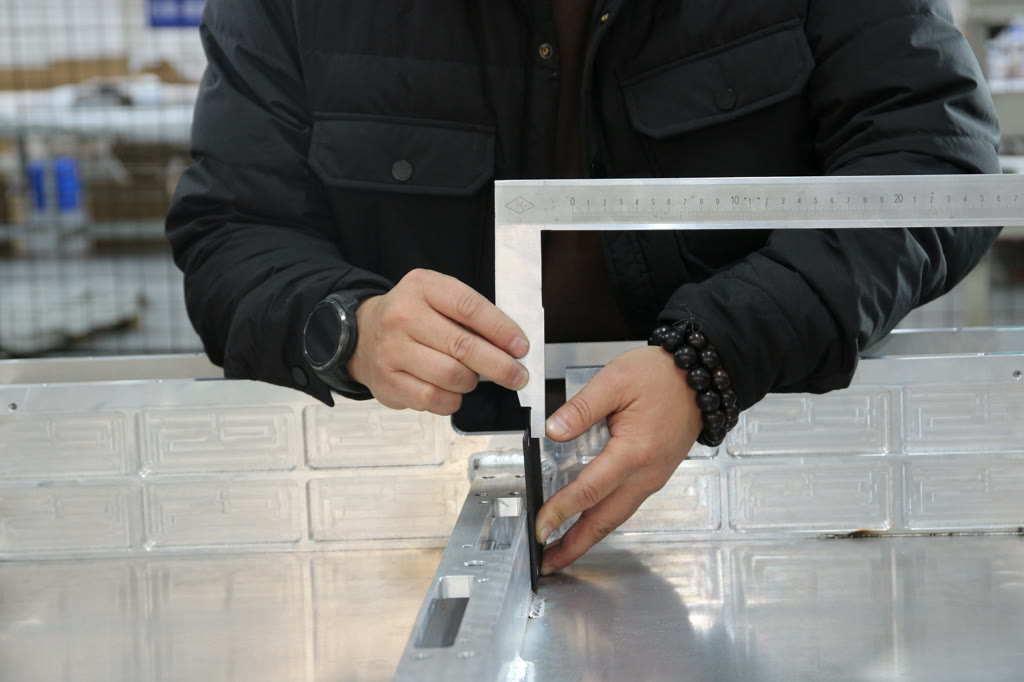
Figure 7. Checking a welded aluminum enclosure against the drawing before shipment.
At STARWAY MFG GROUP, our approach is to review the drawing before we price it. If a feature looks hard to form, a tolerance is unclear or the finish note is open, we ask, or we write the assumption into the quotation so you can see it. Comments on manufacturability come back with the quote through our design and engineering support.
Our Nantong Flexible Manufacturing Base holds ISO 9001:2015 certification for the processing of sheet metal parts. The work behind a typical quote runs through laser cutting, CNC bending, sheet metal welding, finishing and assembly. For new designs, rapid prototyping lets you check fit before you commit to a production quote. Our quality control information explains the inspection stages you can ask about.
A sheet metal fabrication quote is only as good as the RFQ behind it. Send one complete package. Ask for a breakdown. Bring every quote to the same revision, quantity and delivery term, and read the conditions before you rank anyone. The lowest number on your spreadsheet is a good place to start asking questions. It’s a poor place to stop.
Want to see how your part would be routed and priced? Explore STARWAY’s sheet metal fabrication services, or send us your drawing.
Have a drawing ready?
Mostly because each supplier fills the gaps in the RFQ with its own assumptions. Material grade, finish, inspection scope, packing, NRE and the delivery term can all differ between quotes. Send the same complete package to everyone and ask for a line-item breakdown, and the spread usually narrows to real differences in process and efficiency.
A complete RFQ includes a 2D drawing and 3D model, the revision level, material grade and thickness, finish spec, critical dimensions, hardware, quantity tiers, packing requirements and the delivery term. For assemblies, add the BOM and state which items you supply. The more complete the package, the more comparable the quotes.
Three to five is a practical number for most custom parts. Fewer gives you little to compare against; more creates review work without much new information. Shortlist suppliers that have already passed a basic capability check, so you spend your time comparing quotes from shops that can actually make the part.
Compare them on one basis, ideally your landed cost. EXW leaves export clearance and freight to you, FOB includes export clearance and loading at the port, and DDP includes delivery and duties to your door. Convert every quote to the same term before ranking suppliers, or the comparison will be misleading.
NRE means non-recurring engineering: one-time costs such as welding fixtures, special punches, inspection gauges or programming. Some suppliers list it separately and others fold it into the unit price. Ask for it as its own line, then spread it over your expected volume to compare the true cost per part.
Start with the design and the RFQ, not the supplier. Use standard material grades and thicknesses, keep tight tolerances only on functional features, standardize bend radii, reduce masked areas and choose standard finish colors. Asking for several quantity tiers also shows where batch size brings the unit price down.
It varies by supplier, so check the validity stated on each quote. Many quotes hold for a limited period because steel and aluminum prices change. For repeat orders, ask whether the price is fixed or adjusts with the material market, and which reference the adjustment uses.
Usually not. Prototype parts often involve manual setups, low quantities and extra engineering attention, so the unit price is higher. Production pricing depends on the process route, fixtures and batch size. Ask for both, and ask what changes between the prototype and production process.
A 2D drawing with full dimensions can be quoted, but a 3D model (STEP is common) makes the quote faster and reduces interpretation errors. The drawing still carries tolerances, finish notes and revision control, so send both when you can and state which one governs if they differ.
Send the drawing and 3D model, material and thickness, finish, quantities and your delivery location through our contact page. Our engineers review the drawing and come back with questions or DFM comments alongside the quotation, so the assumptions behind the price are clear.

This website uses cookies to provide you with a personalized browsing experience and analyze website traffic. By clicking "Accept", you agree to our use of cookies.



 Global