
Sheet Metal Fabrication Design Engineering Project management Assembly Rapid Prototyping Packaging Shipping & Delivery
CNC Machining Design Engineering Project management Assembly Rapid Prototyping Packaging Shipping & Delivery
Plastic Injection Molding Design Engineering Project management Assembly Rapid Prototyping Packaging Shipping & Delivery
Buyer’s Guide | STARWAY MFG GROUP
By Alyssa / September 20, 2026
LinkedIn / Facebook / YouTube
Contents
Ask ten custom manufacturing suppliers for a quotation and most will return one within a day. Reading a drawing and producing a price is not a differentiator any more. What separates suppliers is what happens in the months after the purchase order — whether a system exists that holds the process steady when materials move, schedules compress and drawings change. That is what experienced OEM buyers have learned to audit, and it is rarely visible in a quotation.
This guide is written for procurement managers, sourcing engineers and product designers who place custom metal and plastic parts with overseas suppliers, and who carry the consequences when a supplier turns out to be less capable than the quotation suggested.
From my experience supporting international OEM projects, the buyers who avoid the most trouble are the ones who ask to see records rather than credentials. A certificate confirms that a system existed on the day an auditor visited. Twelve months of inspection reports, calibration logs and corrective actions confirm that it was used on ordinary days, which is when your parts are actually made.
STARWAY MFG GROUP has operated since 2011 as an engineering-driven custom manufacturer, covering sheet metal fabrication, CNC machining, injection molding and assembly under one ISO 9001:2015 system. Our Key Account department exists specifically to manage the long-cycle, multi-process programs described below.
If you are still building a shortlist, read this alongside how to choose a CNC machining company, which covers commercial screening. This article covers what happens after screening, when you start testing whether a supplier can actually run your program.
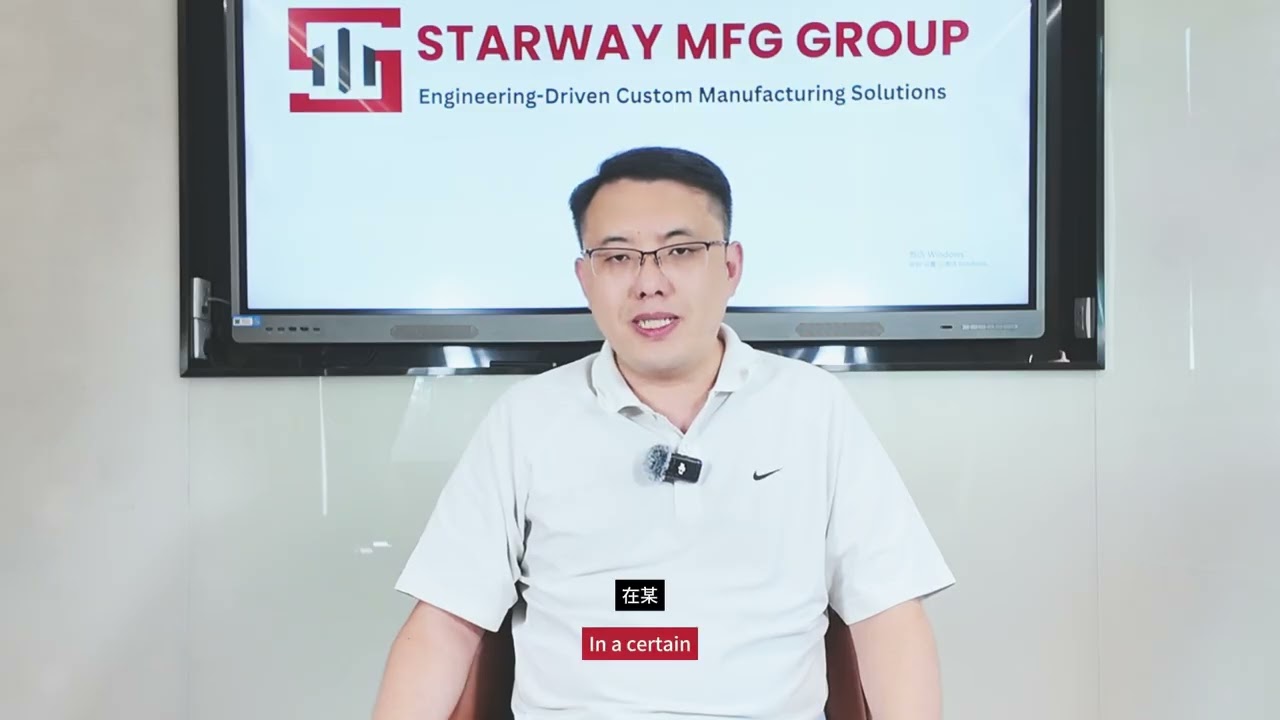
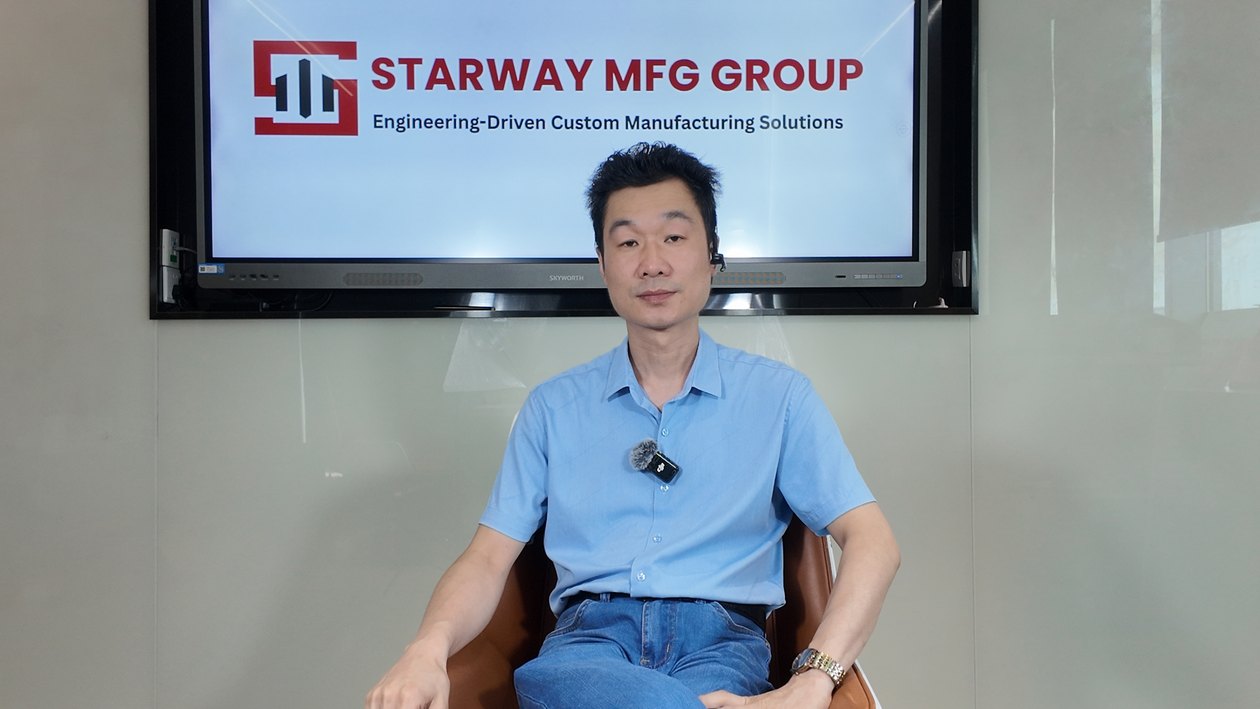
Interview with our Key Account Manager on supplier evaluation. Chinese audio with English subtitles. Watch on YouTube
Large buyers routinely spend six to twelve months qualifying a new supplier. First-time sellers often find this frustrating, because they assume the certificate settles the question. It does not. A quality certificate demonstrates that a documented system was in place and auditable at a point in time. It says nothing about whether that system survives a busy week.
What sophisticated buyers are really testing is whether management discipline is continuous. They want evidence that the same process was followed in March as in September, on a small order as on a large one. That evidence lives in records, not in framed documents.
Seen this way, an audit is less an inspection than a sampling exercise. The auditor pulls a job from six months ago and traces it end to end. If the trail is complete, the system is real.
| What buyers ask for | What it demonstrates | Why it matters to you |
|---|---|---|
| ISO 9001:2015 certificate | A documented system exists and is externally audited | A minimum threshold, not a guarantee of capability |
| Twelve months of inspection records | The system was applied on ordinary days | Predicts consistency across repeat orders |
| Personnel qualification files | Operators are trained and re-assessed | Reduces variation when staff rotate |
| Material purchase records | Sourcing is controlled and traceable | Prevents substitution you never approved |
| Closed corrective actions | Problems get resolved, not just logged | Shows how the supplier behaves after a failure |
Suggested internal link: quality management
The ability to read a drawing and return a price is now widely available. Plenty of workshops can do it competently. Because that capability is common, buyers with significant volume at stake have shifted their attention to what is harder to replicate: how a supplier anticipates and absorbs risk on their behalf.
An equipment inventory tells you what a shop could theoretically do. A control plan tells you what it will do for your specific part. The second document is far more predictive and far less often requested.
Most delivery failures in custom manufacturing are coordination failures, not technical ones. Buyers who have been burned learn to ask how engineering, quality, purchasing and production planning exchange information, and how quickly a change reaches the shop floor.
| Buyer evaluation factor | What to ask a supplier | Why it matters |
|---|---|---|
| Risk anticipation | How do you handle raw material price movement? | Determines whether your cost stays predictable |
| Cross-department flow | How does a drawing revision reach production? | Prevents parts built to a superseded drawing |
| Engineering input | Will you review my design before quoting? | Surfaces cost and feasibility issues early |
| Escalation path | Who tells me when something goes wrong? | Decides whether you hear early or late |
Suggested internal links: design and engineering · project management
Metal prices move. Aluminium in particular has seen meaningful swings in recent years, and those swings pass directly into the cost of a fabricated part. For a buyer running an annual program, an unstable input price becomes an unstable purchase price, which is difficult to defend internally.
A supplier operating professionally does not simply absorb this or pass it through unannounced. The work happens in advance: monitoring the market, assessing exposure on active programs, and holding inventory on materials where volatility is likely. That planning is what allows a quoted price to hold for a defined period.
When you evaluate a supplier, ask directly how they approach this. A vague answer usually means the risk will land on you at the next renewal.
| Risk | Supplier mitigation | Buyer impact if ignored |
|---|---|---|
| Raw material price movement | Forward assessment and buffer stock on volatile grades | Unpredictable unit cost between orders |
| Material lead time extension | Batch release and pre-positioned inventory | Delivery slips with no warning |
| Grade substitution pressure | Documented approval before any change | Parts that do not match specification |
| Single-source dependency | Qualified alternate suppliers per material family | Program stops when one mill does |
Suggested internal link: materials
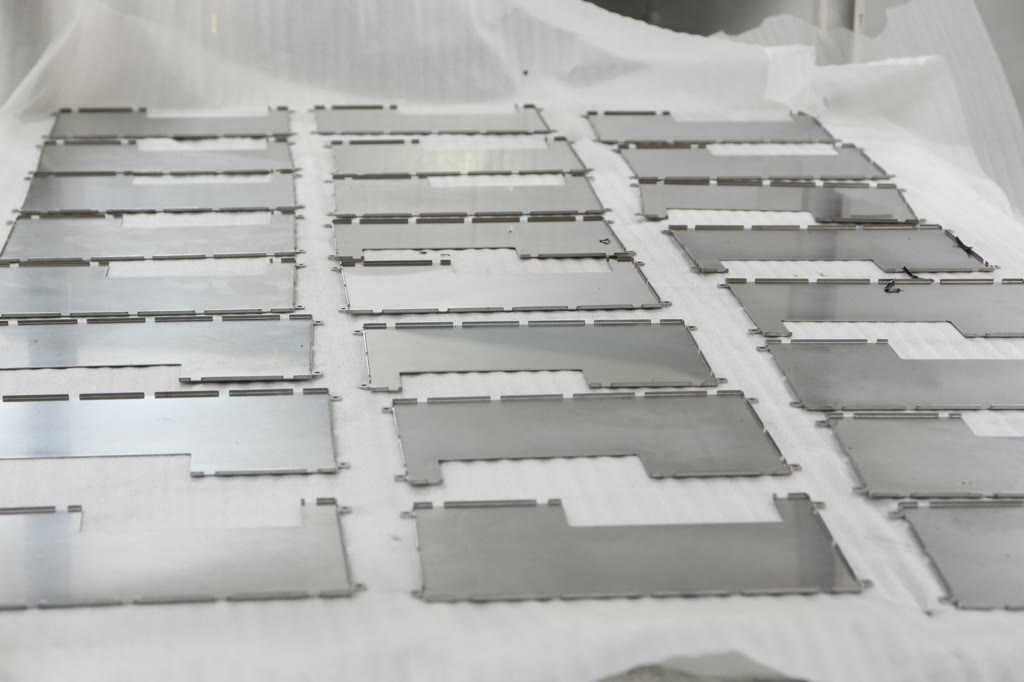
Complex assemblies in metal fabrication routinely involve dozens or hundreds of individual parts spanning sheet metal, machining, surface treatment and bought-out components. At that scale, relying on one capable person to hold the project in their head is not diligence. It is exposure.
The alternative is deliberately unglamorous. At quotation stage, the engineering team breaks the assembly into a complete BOM and verifies every line: price, process route, sampling schedule. Quality and production planning join the same review so that each function knows what it owns, at which milestone, and against which acceptance criteria.
The outcome that matters to you is simple: everyone works from the same revision of the same drawing, and any change propagates to the whole team before parts are cut. Most catastrophic errors in multi-part programs trace back to someone building from an outdated file.
| Project stage | Who is involved | Buyer check point |
|---|---|---|
| BOM breakdown | Engineering, sales | Ask for the BOM back, line by line, with your quote |
| Process route verification | Engineering, production | Confirm which parts go out for surface treatment |
| Sampling schedule | Quality, production | Agree first article scope before the run starts |
| Revision control | All functions | Ask how a mid-production change is distributed |
Suggested internal links: welding service · laser cutting
Send your assembly drawings
Upload your files and receive a free DFM review with a quotation, including a line-by-line BOM breakdown for multi-part assemblies.
Every buyer eventually needs something faster than the standard lead time, and every supplier says they are flexible. The useful distinction is whether that flexibility has stated limits.
Re-sequencing production to accelerate one order is genuinely possible. Non-urgent jobs get rescheduled, capacity is concentrated, and the urgent part moves forward. But acceleration is not free of consequence. Compressing certain processes — curing, surface treatment, weld cooling — introduces quality risk that a responsible supplier will assess before agreeing, not after shipping.
The behaviour to look for is a supplier who says: here is what we can accelerate, here is the risk it creates, here are two alternatives, and we will proceed once you decide. A supplier who simply agrees to any date is either declining to think about it or intending to cut something quietly.
| Acceleration method | Realistic gain | Risk you should be told about |
|---|---|---|
| Re-sequencing the schedule | Meaningful, with no quality trade-off | Another customer’s order is displaced |
| Concentrating capacity | Meaningful on labour-intensive steps | Limited by machine availability |
| Compressing surface treatment | Small | Coating adhesion and finish defects |
| Reducing inspection | Small | Should not be offered at all |
Suggested internal links: grinding and polishing · shipping and delivery
A key account function exists to change the shape of the relationship. The alternative — and it is common — is a supplier who behaves like a stamp: receive drawing, add machining cost, return part. Nothing is contributed beyond capacity.
The more useful arrangement is earlier involvement. When a new project is defined and the drawings are not yet frozen, a manufacturer can review intended geometry and propose adjustments: a bend radius that suits the material, a feature that avoids a secondary operation, a tolerance relaxed where function does not require it. Each change reduces manufacturing difficulty, shortens the route, and usually lowers cost.
Done consistently over several projects, this is what converts a vendor into a partner. It is also the reason some buyers accept a price that is not the lowest quoted — the total cost of the program is lower even when the unit price is not.
| Engagement point | What a manufacturer can contribute | Buyer value |
|---|---|---|
| Concept, drawings not frozen | Process selection and geometry guidance | Largest cost influence, lowest change cos |
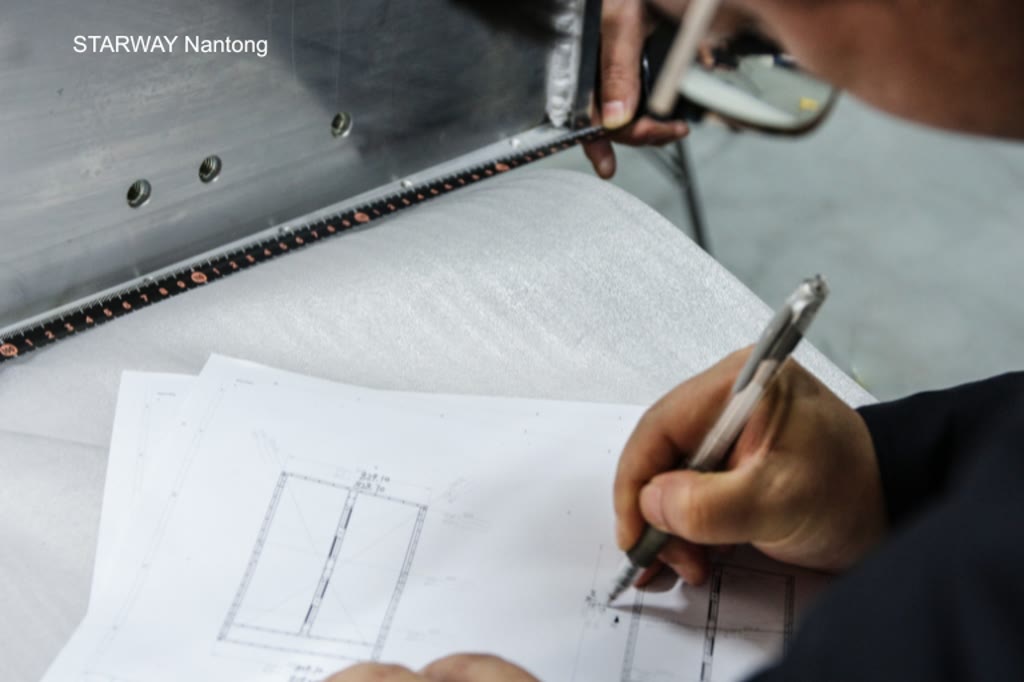
tPrototype stageDFM feedback and material alternativesProblems found before tooling commitmentPre-productionTolerance review and inspection planningFewer deviations during the first runAfter drawings are releasedManufacture as specifiedLimited — the decisions are already made
Suggested internal links: rapid prototyping · robotics and automation
Even very large organisations begin cautiously. After a supplier clears qualification, the next step is usually a small trial order — modest value, limited quantity, sometimes a simple part. It is easy to read this as a low-stakes job. It is the opposite.
A trial order is the only direct evidence a buyer has about how a supplier actually operates. The correct response is to run it through the complete standard process: quotation, sampling, process review, in-process and final inspection, packaging. Not because the part demands it, but because the buyer is measuring the process, not the part.
There is a second reason to take small orders seriously. Trial parts are frequently more demanding than their size suggests, and the supplier who offers a technical improvement at this stage — a better material choice, a simplified feature — demonstrates capability far more convincingly than any presentation.
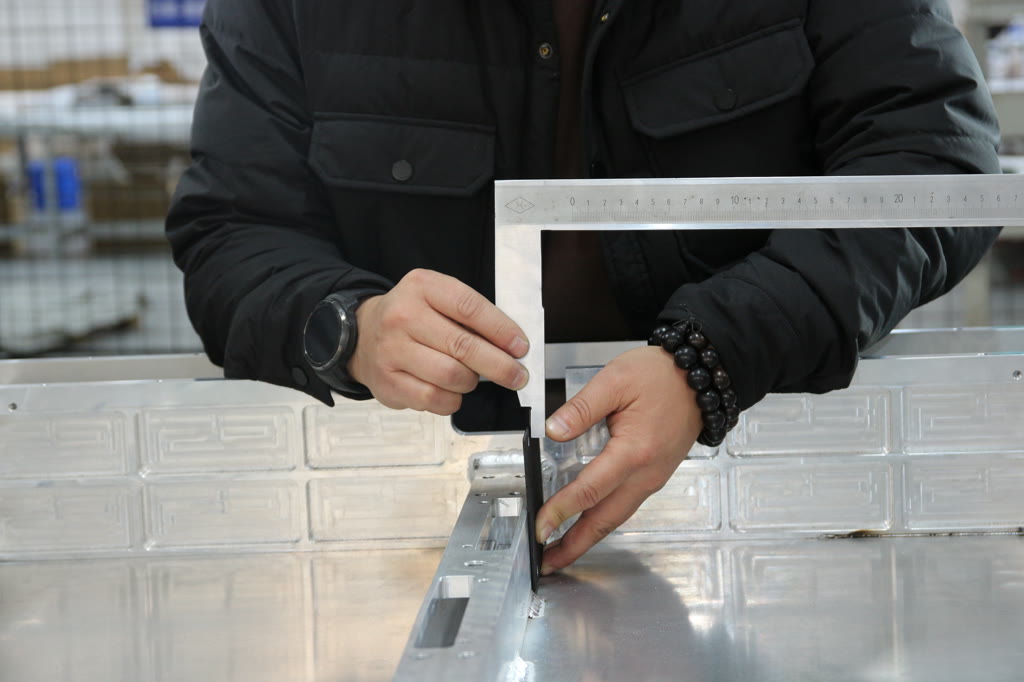
The same discipline applies in reverse. Experience gained on demanding key accounts — stricter quality requirements, formal risk assessment, structured documentation — becomes the standard applied to smaller customers as well. Smaller buyers benefit from methods developed for larger programs, which is often the fastest way to help a growing company avoid expensive early mistakes.
Suggested internal links: medical · FAQs
Supplier evaluation in custom manufacturing has moved on from checking whether a workshop can produce a part. Most can. The question that determines whether a program runs smoothly for three years is whether a system exists that keeps performance stable when conditions are not ideal — when material prices move, when a schedule compresses, when a drawing changes halfway through a run.
That system is visible in records, in how departments coordinate, and in whether a supplier is willing to tell you something you would rather not hear. Ask for those things early. They are far better predictors than a quotation.
Start with a drawing review
Upload your drawings and we will return a free DFM review and quotation, including any manufacturability or tolerance issues we find. Trial order or annual program, the same process applies.
Six to twelve months is common for programs of significant value. The process typically includes document review, an on-site or remote audit, a sample submission and a trial order before volume release.
It is a threshold rather than a conclusion. ISO 9001:2015 confirms a documented and audited quality system exists. Buyers should additionally review inspection records, calibration logs and closed corrective actions covering the previous twelve months.
Ask how long a quoted price is held, which material families the supplier carries in buffer stock, and what triggers a price review. A supplier with no considered answer will usually transfer the volatility to you at renewal.
Ask for a line-by-line BOM breakdown covering every part, its process route, material and sampling requirement, rather than a single assembly price. This makes cost drivers visible and reduces the chance of a missed component.
Yes, through re-sequencing and concentrating capacity. What cannot be safely compressed are chemistry-dependent steps such as surface treatment and curing. A supplier should tell you which parts of the route are flexible and which are not.
Not automatically. The lowest quote sometimes reflects an unexamined drawing, a thinner material assumption or reduced inspection. Compare what is included, and confirm the general tolerance standard and inspection scope are equivalent across quotes.
Before drawings are frozen. Early DFM input has the largest influence on cost and lead time and the lowest cost of change. Once drawings are released, a manufacturer’s contribution is largely limited to execution.
Enough parts to exercise the real process, typically 10–50 pieces for fabricated metal components. The objective is to observe quotation, sampling, inspection and packaging behaviour, not to obtain the lowest unit price.
Request the control plan, first article report, in-process inspection records, calibration certificates and staged production photographs. Combined with a trial order, this provides most of the assurance of an on-site audit.
Typically a packing list, inspection report covering agreed dimensions, material certificates where specified, and photographs of packing. Agree the document set before production so there is no dispute at delivery.
They should. Methods developed for demanding programs — structured risk assessment, formal documentation, staged inspection — are applied across order sizes. Smaller buyers often benefit most, because those methods prevent the mistakes that are expensive to discover late.
Send your drawings through the contact page and STARWAY MFG GROUP will return a free DFM review and quotation covering sheet metal fabrication, CNC machining, finishing and assembly.



This website uses cookies to provide you with a personalized browsing experience and analyze website traffic. By clicking "Accept", you agree to our use of cookies.


 Global