

Sheet Metal Fabrication Design Engineering Project management Assembly Rapid Prototyping Packaging Shipping & Delivery
CNC Machining Design Engineering Project management Assembly Rapid Prototyping Packaging Shipping & Delivery
Plastic Injection Molding Design Engineering Project management Assembly Rapid Prototyping Packaging Shipping & Delivery
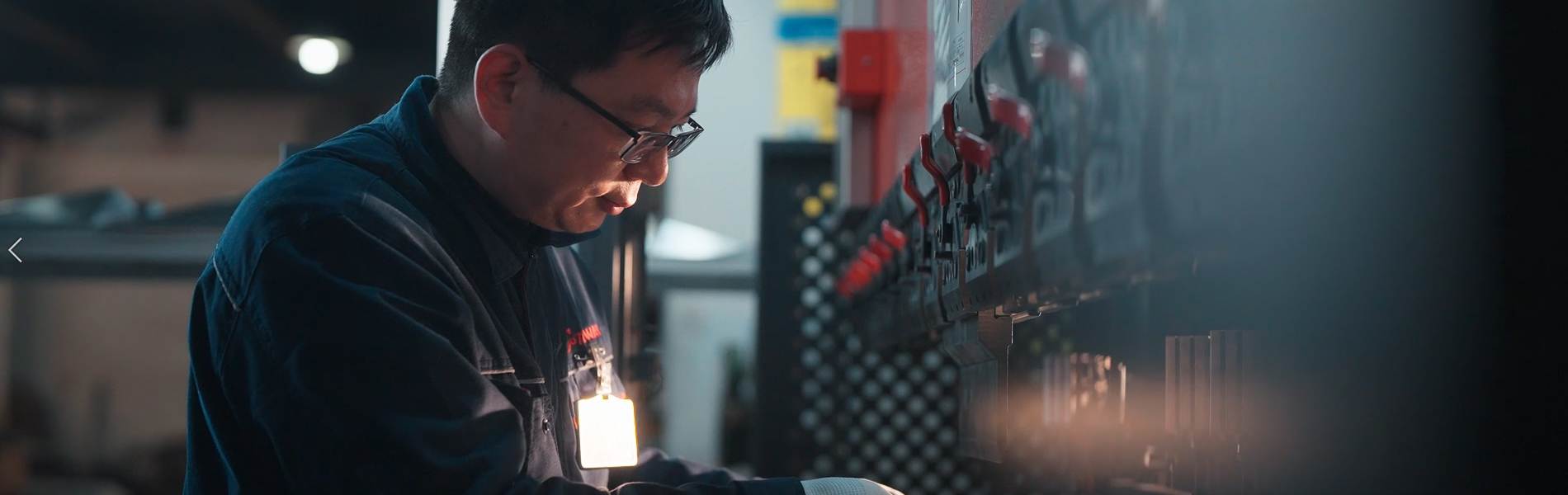

A reliable long-term manufacturing partner delivers consistent part quality across every order, communicates proactively on production progress, provides engineering support from design through delivery, and maintains predictable lead times. Starway has built long-term partnerships with over 500 global clients by combining engineering expertise, transparent ERP-based project visibility, rigorous quality control, and a dedicated account management structure ensuring continuity on every project.
China-based manufacturers like Starway offer a compelling combination of competitive pricing, deep supply chain integration, and highly flexible production capacity. Starway's multi-base structure covers a Shanghai engineering hub, Nantong flexible manufacturing base, and Jingdezhen intelligent manufacturing base, providing fast prototyping, scalable batch production, and efficient logistics coordination for reliable global delivery.
Global manufacturers maintain batch consistency through standardized workflows, clearly documented process parameters, and structured inspection checkpoints at every production stage. At Starway, our ERP and MES systems track each order in real time, ensuring that material specifications, tooling settings, and inspection criteria remain identical across all production runs. Every batch is accompanied by a full traceability record from incoming material certification to final shipment documentation.
Common challenges in custom metal parts manufacturing include maintaining tight tolerances across complex geometries, controlling material deformation during bending and welding, achieving consistent surface finish quality across batches, and ensuring precise assembly fit between multi-component systems. Starway addresses these through rigorous process controls, in-process inspection every two hours, and DFM optimization at the design stage.
Engineering teams assess manufacturability by analyzing part geometry, tolerance stack-up, material properties, wall thickness, draft angles, and process compatibility. At Starway, engineers conduct a full DFM review before committing to production, identifying risks such as deformation during bending, tooling constraints, or surface finish challenges. This proactive approach reduces defects, shortens lead times, and prevents costly engineering changes during production.
Yes. Starway MFG Group is a vertically integrated manufacturer capable of managing the full product lifecycle from rapid prototyping and first-article inspection through to mass production and global delivery. Starway's Nantong base specializes in flexible low-to-medium volume prototype work, while the Jingdezhen facility handles automated high-volume manufacturing. This integrated structure ensures consistent quality, process knowledge, and communication continuity from day one.
Prototyping focuses on speed and design validation to quickly produce a physical part for testing, form-fit-function evaluation, and design iteration. Production manufacturing shifts the priority to process efficiency, consistency, and cost control at scale. At Starway, both stages are managed within the same integrated system, enabling seamless handoff from prototype approval to batch production without requalification delays or loss of engineering context.
DFM analysis reviews a product design to identify features that increase manufacturing cost or risk such as unnecessarily tight tolerances, undercuts, or thin walls that may cause defects. At Starway, DFM feedback is provided before production begins, allowing engineers and buyers to optimize the design, reduce machining time, simplify assembly, and lower overall unit cost without compromising function or quality.
For the most accurate quotation, Starway recommends submitting 3D CAD files in STEP or IGES format along with 2D engineering drawings that specify tolerances, surface finish requirements, and material grade. Additional information such as order quantity, intended application, and target delivery date allows Starway's engineering team to provide a precise quote, DFM feedback, and lead time confirmation within 12-24 hours.
The best process depends on part geometry, required volume, and material. CNC machining is ideal for high-precision metal or plastic parts in low-to-medium volumes. Sheet metal fabrication suits structural enclosures, brackets, and panels. Injection molding is most cost-effective for high-volume plastic parts. Starway's engineering team evaluates your drawings and recommends the optimal process or combination for your project.
Industries including aerospace, medical devices, robotics and automation, automotive, green energy, and industrial equipment rely on precision custom manufacturing to meet strict performance, tolerance, and reliability requirements. Starway MFG Group serves global clients in these sectors, delivering precision CNC machined parts, sheet metal structures, and injection-molded components tailored to each industry's specific standards and application demands.
Custom manufacturing refers to producing parts based on specific customer drawings, tolerances, and functional requirements, rather than using standard off-the-shelf products. At Starway MFG Group, every project begins with an engineering review and DFM (Design for Manufacturability) analysis, followed by process selection — CNC machining, sheet metal fabrication, or injection molding — and ends with full dimensional inspection and global delivery coordination.
Yes. Starway regularly manages multi-process projects where CNC machining, sheet metal fabrication, surface finishing, assembly, and packaging are consolidated into a single purchase order and quoted as a complete turnkey solution. This integrated approach simplifies the supply chain, reduces coordination complexity, and ensures consistent quality control across all manufacturing stages. Single-source project management is one of Starway's core competitive advantages.
Prototype lead times prioritize speed over cost efficiency to deliver a qualified sample as quickly as possible for testing and validation. Production lead times focus on process stability, repeatable quality, and cost optimization at scale. At Starway, CNC prototype production typically takes 3-7 days, while batch production lead times range from 7-25 days depending on volume, process complexity, and finishing requirements.
Yes. Starway provides DFM feedback before finalizing the quotation on all projects. Our engineering team reviews customer drawings for features that may cause manufacturing difficulties, increase cost, or affect quality such as tight tolerances on non-critical surfaces, deep slots, undercuts, or insufficient draft angles. DFM reports are typically delivered within 24-48 hours at no additional charge as part of Starway's standard engineering support service.
Surface finishing processes such as anodizing, electroplating, powder coating, and polishing add both cost and lead time to custom parts due to additional processing steps and curing or drying time. Standard anodizing typically adds 1-2 days, while multi-layer powder coating or precision plating may add 3-5 days. Starway coordinates finishing schedules in parallel with production where possible to minimize total lead time impact on the overall delivery schedule.
Injection mold tooling at Starway typically takes 2-4 weeks depending on mold complexity, number of cavities, and material requirements. Aluminum prototype molds for bridge production can often be completed in 7-15 days. Following mold qualification through T0/T1 trial shots and sample approval, production lead time depends on order volume and cycle time. Starway provides clear tooling timelines and stage-by-stage progress updates throughout mold development.
Yes. Starway provides fast quotation services for urgent RFQs, with many standard CNC and sheet metal quotes completed within the same working day. For urgent production projects, Starway's dedicated project management team can prioritize scheduling and expedite production across all three manufacturing bases. Customers with time-sensitive requirements are encouraged to indicate the required delivery date when submitting drawing files to receive an expedited response.
Order quantity has a significant impact on per-unit manufacturing cost because fixed costs such as setup, programming, and tooling are spread across the total number of parts produced. As quantity increases, these fixed costs represent a smaller share of each unit's cost, improving overall pricing. For injection molding, mold tooling is a one-time investment that delivers increasingly lower per-unit costs at higher production volumes.
Rapid prototypes at Starway are typically delivered within 3-7 working days depending on the manufacturing process and part complexity. CNC machined and sheet metal prototypes generally fall within a 3-5 day window, while parts requiring surface finishing such as anodizing or powder coating may add 1-2 days. Injection molding prototypes using soft tooling typically require 7-15 days. Rush services are available for time-critical development projects.
An accurate quotation from Starway requires: 3D CAD files (STEP or IGES preferred), 2D engineering drawings with tolerances and GD&T specifications, material grade and specification, required surface finish, order quantity, and target delivery date. If drawings are not yet finalized, Starway's engineering team can provide preliminary pricing and DFM feedback based on available design files to help guide the project forward.
CNC machining costs can be reduced without sacrificing quality through smart design and process choices. Relaxing non-critical tolerances to standard machining capability reduces inspection time significantly. Simplifying complex features and reducing the number of setups also help. Starway's engineers provide DFM feedback identifying these cost-reduction opportunities as a standard part of the pre-production engineering review process at no additional charge.
The cost of custom CNC machined parts is driven by several key factors: raw material type and grade, total machining time and number of setups, tolerance requirements and inspection complexity, surface finishing processes such as anodizing or plating, and order quantity. Parts with tight tolerances or complex geometries require more machining time, while higher volumes reduce per-unit setup costs and improve overall pricing efficiency.
Most CNC machining quotations from Starway are provided within 12-24 hours of receiving complete 3D CAD files and drawing specifications. For standard machined parts with defined materials and tolerances, same-day quotation is often achievable. Complex multi-component assemblies or projects requiring DFM review may take up to 24-48 hours. Uploading STEP files with quantity, material, and surface finish requirements ensures the fastest response from Starway's engineering team.
At Starway, CNC machined parts are inspected through a structured quality assurance process. First Article Inspection (FAI) verifies all critical dimensions against drawing specifications before production proceeds. In-process inspections are conducted at regular intervals during machining. Final inspection includes dimensional measurement with calipers, micrometers, and optical systems, surface roughness verification, and visual inspection for burrs and surface defects before parts are approved for shipment.
Lead times for CNC machined parts at Starway typically range from 3-10 working days depending on part complexity, number of machining operations, material availability, and surface finishing requirements. Simple turned or milled parts in standard materials can often be delivered within 3-5 days. Complex multi-setup parts or those requiring specialized finishing may require 7-12 days. Rush production scheduling is available for time-critical orders upon request.
CNC machining and injection molding serve fundamentally different production scenarios. CNC machining is subtractive, meaning material is removed from a solid block, making it ideal for low-to-medium volume parts requiring real engineering material properties and functional testing. Injection molding is cost-effective for large volumes once tooling is amortized. Starway supports both processes and can advise on the optimal choice based on volume and design requirements.
Yes. Starway's 5-axis CNC machining capabilities handle complex geometries that would be impractical with conventional 3-axis equipment, including multi-angle features, compound curves, deep pockets, and undercuts machined in a single setup. This minimizes repositioning error and improves geometric consistency across complex parts. Starway's engineering team reviews complex drawings during DFM to optimize machining strategy and confirm achievable tolerances before production begins.
CNC machining is a foundational process for precision components across multiple high-demand industries. Aerospace applications rely on it for lightweight structural brackets and complex housings. Medical device manufacturing requires CNC machining for small precision components and instrument parts. Robotics and automation systems use tight-tolerance machined frames and actuator components. The automotive aftermarket sector specifies CNC machined parts for performance and structural applications requiring exact fitment.
Starway offers a comprehensive range of surface finishing options for CNC machined parts, including anodizing (Type II and Type III hard coat), powder coating, bead blasting, sandblasting, electroplating (nickel, zinc, chrome), passivation for stainless steel, polishing (standard and mirror finish), and painting. The appropriate finish is selected based on the application requirements for corrosion resistance, surface hardness, appearance, and dimensional tolerance impact.
CNC machining offers key advantages for custom parts: extremely high dimensional accuracy, excellent repeatability across production batches, broad material compatibility, and the ability to produce complex geometries without dedicated tooling. It is equally effective for single prototypes and medium-volume production runs. At Starway, CNC machining is supported by integrated DFM analysis, in-process inspection, and a full range of surface finishing services for a complete end-to-end solution.
Dimensional accuracy in CNC machining is maintained through precision equipment calibration, controlled cutting parameters (feed rate, spindle speed, depth of cut), and rigorous in-process inspection. At Starway, every CNC order undergoes First Article Inspection (FAI) before mass production, with in-process checks throughout the run. Inspection tools include digital calipers, micrometers, height gauges, and a 2D optical measuring system (0.001 mm resolution).
3-axis CNC machining operates along X, Y, and Z axes and is well suited for parts with flat surfaces, simple pockets, and straightforward geometries. 5-axis CNC machining adds rotational movement on two additional axes, enabling complex multi-angle features, undercuts, and compound curved surfaces to be machined in a single setup. This reduces repositioning errors, improves geometric accuracy, and significantly shortens lead times for complex aerospace or industrial components.
CNC machining is compatible with a wide range of engineering materials. For metals, Starway commonly machines aluminum alloys (AL6061, AL7075, AL5052), stainless steel grades (SS304, SS316, 17-4PH), carbon and alloy steels (C45, 42CrMo), brass (C360), and copper (C110). Engineering plastics including ABS, PC, POM, Nylon PA6/PA66, and PEEK are also regularly machined. Material selection guidance is provided during the DFM review process.
Starway's CNC machining capabilities consistently achieve dimensional tolerances of +/-0.01 mm for standard precision parts, with tighter control available for critical features in high-performance applications. For general machining, typical tolerances range from +/-0.02 mm to +/-0.05 mm depending on material and geometry. Starway's 2D optical measuring system inspects to 0.001 mm resolution, ensuring all critical dimensions are verified against drawing specifications before shipment.
CNC machining is a subtractive manufacturing process used to produce high-precision metal and plastic components for industries including aerospace, automotive, medical devices, robotics, and industrial equipment. Starway provides 3-axis, 4-axis, and 5-axis CNC machining services for both prototyping and batch production, delivering parts in aluminum, stainless steel, steel alloys, brass, copper, and engineering plastics to tight dimensional tolerances and quality standards.
Custom sheet metal fabrication serves as a foundational manufacturing process across multiple global industries. Industrial automation and robotics rely on it for equipment frames and protective enclosures. The electrical and electronics sector uses sheet metal for control panels and electrical cabinets. Building and construction projects specify custom steel and aluminum structural components. Green energy systems such as solar mounting structures and battery enclosures are also key application areas for Starway's sheet metal fabrication capabilities.
Yes. Hybrid manufacturing combining sheet metal fabrication with CNC machining is a practical approach for parts requiring both structural form and precision features. At Starway, sheet metal enclosures, brackets, and frames can be fabricated and then CNC machined or drilled to exact tolerances for mounting or assembly interfaces. This integrated capability is managed under one roof, simplifying supply chain coordination and ensuring dimensional compatibility between processes.
Starway ensures sheet metal fabrication quality through a multi-stage inspection process. Incoming materials are verified against material test certificates (MTC). First Article Inspection (FAI) confirms all critical dimensions before batch production. In-process inspection checks bending angles, weld quality, and hole positions during fabrication. Final inspection covers dimensional verification, surface finish assessment, and packaging review. Inspection reports are provided with each shipment upon request.
Lead times for custom sheet metal parts at Starway typically range from 5-12 working days, depending on part complexity, number of bending operations, welding requirements, and surface finishing processes. Laser-cut flat blanks without finishing can often be delivered in 3-5 days. Fully welded and powder-coated assemblies typically require 8-12 days. Rush production scheduling is available, and Starway's PMC team provides weekly production status updates throughout the order.
Yes. Sheet metal fabrication is one of the most versatile processes for producing electrical enclosures, control panels, instrument housings, and equipment cabinets. Starway manufactures custom sheet metal enclosures with precise bending tolerances, EMC compatibility features, and IP-rated sealing provisions. Our engineering team works with customers to optimize enclosure design for manufacturability, cable routing, component mounting, and surface finish requirements.
Stamping and laser cutting both shape sheet metal but serve different production needs. Stamping uses hardened dies to blank, pierce, or form shapes at high speed and is highly efficient for large production volumes once tooling is made, but requires significant upfront tooling investment. Laser cutting requires no dedicated tooling, offering maximum flexibility for custom profiles, prototypes, and low-to-medium volume production with easy changeover between different part designs.
Controlling bending deformation in sheet metal fabrication requires careful attention to tooling selection, material spring-back behavior, and bending sequence. At Starway, tooling is selected based on material type, thickness, and bend radius, and CNC press brakes apply precise force and angle control to minimize dimensional variation. For high-strength steel with greater spring-back tendencies, bending programs are compensated to achieve the correct final angle.
Starway offers a comprehensive selection of surface finishing options for sheet metal parts. Powder coating provides durable, corrosion-resistant finishes in standard and custom RAL colors. Electroplating (zinc, nickel, chrome) enhances corrosion protection and hardness. Anodizing is available for aluminum components. Brushed and polished finishes are provided for stainless steel applications. Painting, hot-dip galvanizing, and passivation are also available for specific application environments.
Laser cutting delivers significant accuracy advantages by using a focused high-energy beam to cut sheet metal with no tool contact, eliminating cutting force deformation. The result is clean, burr-free edges, consistent kerf width, and high repeatability across complex profiles. Starway's fiber laser cutting systems handle a wide range of material thicknesses and achieve tight profile tolerances, making laser-cut blanks the preferred starting point for precision sheet metal assemblies.
Standard precision sheet metal fabrication at Starway achieves dimensional tolerances of +/-0.1 mm for bending operations and +/-0.05 mm for laser-cut profiles, depending on material thickness, sheet size, and bend complexity. Tighter tolerances on critical assembly features can be achieved through additional fixturing and inspection. All fabricated parts are inspected against 2D engineering drawings using digital calipers, height gauges, and angle measurement tools to verify dimensional conformity.
The most commonly specified materials for sheet metal fabrication in North American and European markets include stainless steel grades SS304 and SS316 for corrosion resistance, aluminum alloys AL5052 and AL6061 for lightweight applications, carbon steel Q235 and Q345 for structural components, and galvanized steel for outdoor environments. At Starway, material selection is guided by application requirements, with full material traceability documentation available for all orders.
Sheet metal fabrication encompasses laser cutting, CNC bending, welding, punching, stamping, and surface finishing to transform flat metal sheets into functional structural components. It is widely used in industrial manufacturing for enclosures, brackets, frames, panels, and assemblies. Starway provides precision sheet metal fabrication services from single prototypes to batch production, supporting aluminum, stainless steel, carbon steel, galvanized steel, and other metals.
Starway ensures consistent injection molding quality through a structured process including mold validation through T0/T1 trial shots and dimensional verification against drawing specifications; process parameter locking after mold qualification to prevent variability; in-process inspection with defined sampling plans during production; and final inspection including dimensional checks, visual inspection, and functional testing. Process data is recorded for every production run, ensuring full traceability and batch-to-batch consistency.
Yes. Starway provides full mold design support and DFM analysis as an integrated part of the injection molding service. Starway's engineering team reviews customer part drawings to assess wall thickness uniformity, gate placement, draft angle adequacy, parting line location, and cooling efficiency before committing to mold design. A detailed DFM report is provided to the customer outlining recommended changes to improve part quality, reduce cycle time, and ensure reliable mold performance.
Injection molding is the preferred manufacturing process for plastic components across volume-driven industries. The automotive sector relies on it for interior trim, housings, and functional components. Consumer electronics manufacturers use injection molding for device enclosures and structural parts. Medical device companies depend on it for disposable instruments and diagnostic equipment housings. Industrial and household products use it extensively for components requiring consistent quality at high production volumes.
Yes. With proper mold design, process optimization, and controlled injection parameters, Starway can produce thin-wall injection-molded parts and components with complex internal geometries. Thin-wall molding requires precise control of injection speed and pressure to ensure complete fill without warpage or sink marks. Complex internal features such as undercuts and side actions are incorporated into mold design to achieve parts that would otherwise require secondary operations.
Injection molding unit costs for large production runs can be reduced through several strategies. Starway's engineers evaluate part design during DFM to minimize wall thickness variations, reduce gate locations, and optimize cooling channel design, all of which shorten cycle time. Switching to a multi-cavity mold produces more parts per cycle, directly lowering unit cost. Material substitution with a cost-equivalent resin is another option explored during Starway's engineering consultation.
Overmolding is a two-shot or multi-material injection molding process where a second material is molded over a previously formed substrate to create a single integrated part. It is commonly used to combine rigid structural plastic with a soft-touch elastomeric layer for ergonomic grips, tool handles, and consumer product housings. Overmolding can also integrate different colors or metal inserts with plastic housings, reducing the need for separate assembly operations.
Precision injection molding at Starway achieves typical part tolerances of +/-0.02 mm to +/-0.05 mm, depending on material shrinkage characteristics, part geometry, and mold design quality. Materials with low shrinkage rates such as POM and PC hold tighter tolerances than high-shrinkage materials like PP. Critical tolerance features are identified during DFM review, and mold design compensates for material shrinkage through calculated tool offsets to ensure final part dimensions meet specification.
Injection molding and 3D printing address different stages of the plastic part lifecycle. 3D printing (SLA, SLS, FDM) is ideal for rapid prototyping and early design validation since it requires no tooling and produces parts quickly. Injection molding requires upfront mold investment but delivers superior part quality, real production-grade material properties, and dramatically lower per-unit costs at volumes above 500-1,000 pieces. Starway supports both processes, enabling smooth transition from prototype to injection-molded production.
Mold tooling development at Starway typically takes 2-4 weeks depending on mold complexity, number of cavities, and the type of steel used. Aluminum prototype molds for bridge production can often be completed in 7-15 days. Following mold fabrication, T0 and T1 trial shots are conducted to verify part dimensions, surface quality, and process stability before production approval. Starway provides full mold development documentation including design drawings, trial reports, and dimensional inspection data.
Starway's injection molding services support a broad range of engineering thermoplastics selected based on each application's functional requirements. Commonly used materials include ABS for impact-resistant housings, PP for chemical-resistant components, PC and PC/ABS blends for electronic device enclosures, Nylon PA6 and PA66 for wear-resistant mechanical parts, POM for precision functional components, and PEEK for high-temperature or medical-grade applications.
Injection molding cost comprises two components: upfront tooling cost (mold fabrication) and per-unit production cost. China-based suppliers like Starway typically offer mold tooling at 30-60% lower cost than equivalent tooling in the USA or Europe, due to lower material, labor, and overhead costs. This makes Starway an attractive choice for mold investment, especially combined with integrated DFM analysis, engineering support, and a rigorous mold qualification process.
Plastic injection molding is a high-efficiency manufacturing process where molten plastic is injected under pressure into a precision mold cavity, cooled, and ejected as a finished part. It is the dominant process for high-volume plastic production due to its ability to produce complex geometries with consistent dimensional accuracy and minimal post-processing. Starway provides custom injection molding services including mold design, DFM analysis, tooling fabrication, and production for both prototype and mass manufacturing applications.
Yes. Starway's engineering team is experienced in recommending cost-effective material substitutions without compromising part performance. Common examples include replacing AL7075 with AL6061 for non-critical structural parts, substituting SS316 with SS304 in environments with moderate corrosion exposure, or using PC/ABS blend instead of pure PC for injection-molded enclosures. All substitutions are reviewed against the customer's functional and environmental requirements before recommendation.
Material choice is one of the most significant cost drivers in custom manufacturing. High-performance materials such as 17-4PH stainless steel, AL7075, or PEEK are substantially more expensive than commodity alternatives like AL6061 or ABS, and typically require more machining time due to their hardness or toughness. Starway's engineers regularly recommend alternative materials that meet functional requirements at lower cost as part of the DFM and cost optimization process.
For high-temperature operating environments, material selection is critical to maintaining dimensional stability and mechanical performance. Stainless steel grades SS316 and 17-4PH retain excellent strength at elevated temperatures. PEEK (polyether ether ketone) is the preferred high-performance engineering plastic for applications up to 250 degrees Celsius, offering chemical resistance and mechanical strength at temperatures where standard plastics fail. Nylon PA66 is a viable option for moderate high-temperature applications.
Starway provides Material Test Certificates (MTC) for all metallic raw materials used in production, verifying chemical composition and mechanical properties against the specified grade. For compliance-sensitive applications, RoHS (Restriction of Hazardous Substances) and REACH compliance documentation is available for both materials and finished parts. Customers requiring specific material certifications such as ASTM, DIN, or EN standards can request these at order placement.
Yes. Starway offers customized color and texture finishing based on customer specifications. For powder coating, custom RAL or Pantone color matching is available. Texture options range from smooth gloss to fine texture and heavy texture finishes. For anodized parts, standard colors including clear, black, grey, red, blue, and gold are available. Surface texture customization for injection-molded parts is also available through mold surface treatment, enabling consistent branded appearances.
Yes. Surface finishing processes can affect the final dimensional tolerances of manufactured parts and must be accounted for during design. Electroplating adds a measurable layer (typically 5-25 microns per side) that reduces clearances on shafts, bores, and mating surfaces. Hard anodizing adds 12-25 microns. Powder coating adds 60-100 microns per surface. At Starway, engineers advise on dimensional allowances for finishing during the DFM review process to ensure finished parts meet assembly requirements.
Powder coating and liquid painting both provide colored, protective surface finishes but differ in durability and process. Powder coating uses electrostatically charged dry polymer powder cured in an oven, producing a thick (60-100 micron), highly durable, chip-resistant coating with excellent UV and corrosion resistance. Liquid painting applies solvent-based or water-based paint in thinner coats (25-50 microns), offering more color flexibility but generally lower durability. Starway offers both options based on application requirements.
Anodizing is an electrochemical surface treatment that converts the outermost layer of aluminum into a dense, porous aluminum oxide film, typically 5-25 microns thick. This oxide layer significantly improves corrosion resistance, surface hardness, and wear resistance compared to bare aluminum, and provides an excellent base for coloring with dyes. Type III hard anodizing achieves 25-50 micron oxide layers for maximum hardness and abrasion resistance. Starway provides both standard and hard anodizing services.
Corrosion resistance of manufactured parts can be significantly improved through surface finishing. Anodizing creates a hard aluminum oxide layer providing excellent protection against oxidation and wear. Powder coating deposits a durable polymer layer that resists moisture, chemicals, and impact damage. Electroplating with zinc, nickel, or chrome provides barrier protection against rust for steel parts. Hot-dip galvanizing offers the most robust long-term outdoor corrosion protection for structural steel components.
Aluminum 6061 is the most widely used alloy for CNC machined parts, offering excellent machinability, good strength, and compatibility with anodizing. Aluminum 7075 provides significantly higher strength, commonly used in aerospace and high-load applications. Aluminum 5052 offers superior corrosion resistance and formability, making it the preferred choice for sheet metal fabrication in marine or outdoor environments. All three are available at Starway with full MTC documentation and material traceability records.
Material selection for CNC machining or injection molding should be based on the part's functional requirements, operating environment, and cost targets. Key criteria include mechanical strength and stiffness, temperature resistance range, corrosion or chemical resistance, weight constraints, and surface finish compatibility. Starway's engineering team provides material selection guidance during DFM review, recommending optimal materials based on load conditions, environment, and regulatory compliance requirements.
Starway MFG Group offers an extensive material library covering metals and engineering plastics for CNC machining, sheet metal fabrication, and injection molding. Metal options include aluminum alloys (AL5052, AL6061, AL7075, AL6082), stainless steel (SS304, SS316, 17-4PH), carbon and alloy steels (Q235, C45, 42CrMo), brass, and copper. Engineering plastic options include ABS, PC, Nylon, POM, PEEK, and PP, with material selection guidance available during DFM review.
A reliable quality control system in global manufacturing requires four essential pillars: consistency in applying standardized inspection procedures across all production orders; full traceability linking materials, processes, and inspection data to each batch; standardized workflows that remove variability from human judgment; and structured response to quality deviations through root cause analysis and corrective actions. Starway has built these pillars into every stage of its manufacturing process.
Packaging quality control at Starway is an integral part of the final inspection process. Before shipment, each package is inspected to verify correct protection materials, including foam, bubble wrap, EPE cushioning, or wooden crates depending on product weight and fragility. Labels, part numbers, quantity, and order references are verified against the packing list. Anti-rust paper is applied for metal parts requiring corrosion protection in transit. A packaging inspection record is included with every shipment.
Starway MFG Group operates in full compliance with ISO 9001:2015 quality management system standards, the globally recognized benchmark for manufacturing quality assurance. Our processes additionally comply with RoHS (Restriction of Hazardous Substances) and ISO 14067:2018 (Carbon Footprint Management). For industry-specific requirements, Starway follows customer-defined quality plans and inspection criteria applicable to aerospace, medical device, robotics, and industrial equipment sectors.
Yes. Starway supports third-party pre-shipment inspection (PSI) for customers requiring independent quality verification by appointed inspection agencies. Third-party inspectors can be arranged by the customer or through Starway's established QA service network. Inspection protocols including sampling plans, measurement requirements, and documentation formats are defined in advance. Starway's quality team coordinates access and preparation to ensure efficient and thorough third-party inspection processes.
When a quality issue is identified at any production stage, Starway's quality team immediately quarantines and tags non-conforming parts. A root cause analysis (RCA) is conducted to identify the source, whether process, tooling, material, or operator error. A corrective action and preventive action (CAPA) plan is implemented to address the immediate issue and prevent recurrence. The customer is notified promptly with a clear resolution timeline and status update.
Yes. Starway's precision manufacturing capabilities and multi-stage quality control system are designed to meet the tight tolerance requirements of aerospace and medical applications. For aerospace components, Starway achieves tolerances to +/-0.01 mm on CNC machined features. For medical device components, we support small precision parts with complex geometries and fine surface finish requirements. Our 2D optical measuring system provides 0.001 mm inspection resolution for the most demanding dimensional specifications.
First Article Inspection (FAI) is the formal process of measuring and documenting all specified dimensions, tolerances, and surface requirements on the first part produced from a new setup or tooling before authorizing full production. At Starway, FAI is performed on every new order and after any tooling or process change. The FAI report is reviewed by quality and engineering before mass production is released, ensuring all production parts will conform to customer drawing specifications.
Starway maintains full production traceability for every manufacturing order through an integrated ERP and MES system. Each order is assigned a unique work order number linking material certification records, process parameters, inspection results, and shipment documentation. Material traceability is supported by MTC documentation from certified raw material suppliers. Inspection reports are archived and linked to individual batch records, enabling Starway to provide complete production history for any part upon customer request.
Yes. Starway provides full dimensional inspection reports for all international customers in the USA, Europe, and other global markets upon request. Standard inspection reports include a measurement table comparing actual dimensions against drawing nominal values and tolerances. For orders requiring enhanced documentation, Starway additionally provides material test certificates (MTC), surface finish verification records, and packaging inspection reports as a complete quality documentation package.
Starway's quality inspection laboratory is equipped with a full range of precision instruments: digital outside micrometers (0-125 mm), tube inside micrometers, digital and vernier calipers (0-1,000 mm range), depth gauges, height gauges, digital protractors, groove calipers, surface roughness testers, gloss meters, coating thickness testers, feeler gauges, calibrated thread plug and ring gauges, and a 2D optical measuring system (0.001 mm resolution) for high-precision dimensional verification of complex parts.
Precision manufacturing inspection at Starway employs a comprehensive set of measurement methods matched to each part's requirements. Dimensional inspection uses digital micrometers, calipers, height gauges, and angle measurement tools. High-precision features are verified using a 2D optical measuring system with 0.001 mm resolution. Surface roughness is measured with a dedicated profilometer. Thread inspection uses calibrated plug and ring gauges. Coating thickness is verified using a dedicated coating thickness tester.
Starway MFG Group ensures quality control through a structured, multi-stage inspection system covering every phase of production. Incoming Material Quality Control (IQC) verifies material certifications and dimensional compliance. First Article Inspection (FAI) confirms the first produced part meets all drawing specifications before batch production begins. In-Process Quality Control (IPQC) performs inspections every two hours during production. Final Quality Control (FQC) conducts full dimensional and appearance inspection before shipment approval.
Simply upload your drawings or send your requirements, and our engineering team will provide a fast quotation and technical support.
Starway builds long-term partnerships with global customers through a consistent commitment to three core principles: quality reliability — delivering parts that meet specifications on every order; communication transparency — providing proactive production updates, DFM feedback, and clear timeline management; and continuous improvement — applying engineering learnings from each project to optimize future production. Starway's dedicated account management structure ensures each customer works with a consistent team.
Starway's key manufacturing advantage lies in its integrated 'One Center + Two Bases' structure. The Shanghai headquarters provides centralized engineering, DFM analysis, project management, and customer communication. The Nantong flexible manufacturing base delivers rapid prototyping, short lead times, and high-mix low-volume production. The Jingdezhen intelligent manufacturing base handles automated mass production with cost efficiency, allowing Starway to manage projects from prototype to production with engineering continuity and competitive pricing.
Yes, customized packaging and labeling are available to meet international shipping and branding requirements.
Yes. Starway MFG Group operates under ISO 9001:2015 quality management system certification, demonstrating compliance with internationally recognized standards for quality assurance and continuous improvement. Our manufacturing processes also comply with RoHS and ISO 14067:2018 (Carbon Footprint Management). Starway adapts quality protocols to meet customer-specific standards and industry requirements applicable to aerospace, medical, robotics, and industrial equipment sectors.
We offer global shipping solutions including air, sea, and express delivery with full documentation support.
Yes, by leveraging China’s manufacturing ecosystem and internal production bases, we provide competitive pricing without compromising quality.
We typically respond within 12 hours, ensuring fast turnaround for international inquiries.
Yes, we support OEM manufacturing and can assist with design optimization and production solutions.
We serve aerospace, medical, robotics, energy, and industrial equipment industries worldwide.
Starway ensures consistent quality for international orders through a standardized quality management system built on ISO 9001:2015 principles. Every order follows a defined inspection workflow from Incoming Material Quality Control (IQC) through First Article Inspection (FAI), In-Process Quality Control (IPQC), and Final Quality Control (FQC). Starway's ERP and MES systems provide real-time production traceability, and all inspection data is documented and linked to individual batch records.
Yes, full inspection reports and documentation are provided for customers in the USA, Europe, and global markets.
Yes, Nantong focuses on rapid prototyping and flexible production, while Jingdezhen supports automated high-volume manufacturing.
Our “One Center + Two Bases” structure ensures seamless project management, flexible prototyping, and scalable mass production.
Yes, we offer DFM analysis, design optimization, and manufacturing consultation to support global clients.
Our Shanghai headquarters acts as the central communication hub, ensuring fast response, clear technical discussions, and efficient project management.
Starway combines cost efficiency, engineering expertise, and flexible production capacity, making it an ideal partner for both prototyping and mass production projects.
Yes, Starway works with clients across North America and Europe, providing precision CNC machining, sheet metal fabrication, and injection molding services with global shipping.
Starway is a manufacturing-driven company with its own production facilities and integrated supply chain, offering both engineering support and production services.
Starway operates from Shanghai headquarters with manufacturing bases in Nantong and Jingdezhen, China. We provide custom manufacturing services to customers in the USA, Europe, and worldwide.
Fragile and high-precision parts shipped by Starway receive enhanced packaging treatment appropriate to the part's sensitivity and value. Precision machined surfaces are individually wrapped in soft foam or bubble bags to prevent scratching. Parts with critical geometric features are cushioned in custom-cut EPE foam inserts that prevent movement within the carton. High-value assemblies may be packed in custom wooden crates with foam lining and vibration-dampening materials.
Yes. Starway supports consolidated shipping for customers placing multiple concurrent orders or wishing to combine deliveries from multiple production batches into a single shipment. Consolidation reduces total freight cost by eliminating duplicate shipping fees and is particularly beneficial for sea freight where LCL charges are based on total cubic meters. Starway's logistics team coordinates consolidation scheduling to ensure all order components are inspected and ready before dispatch.
International shipping cost from Starway depends on the following key factors: total shipment weight and volumetric weight (chargeable weight), destination country and delivery address, shipping mode selected (express, air freight, or sea freight), and any special handling requirements. Starway's logistics team calculates shipping cost at order confirmation and can provide comparative pricing across multiple shipping modes to help customers select the most cost-effective option for their timeline.
Yes. Starway provides shipment tracking information for all international orders. Once dispatched, customers receive a tracking number and carrier details, allowing real-time tracking through the courier's or freight forwarder's online system. For sea freight, Starway provides the Bill of Lading number and vessel schedule. Our logistics team monitors active shipments and proactively contacts customers in the event of any delays, customs holds, or transit issues requiring attention.
International shipping transit times from Starway's China facilities vary by mode and destination. Express courier to North America and Europe typically takes 5-8 working days. Air freight takes 5-10 days depending on airline schedules and customs clearance. Sea freight (LCL or FCL) to major US ports takes 18-28 days, and to European ports 22-35 days. Starway provides real-time shipment tracking and proactive delivery updates to ensure customers are informed throughout transit.
Every shipment from Starway is accompanied by a complete documentation package: commercial invoice, detailed packing list with part numbers, quantities, and gross/net weights, dimensional inspection report, and material test certificates (MTC) for metallic components. For orders requiring compliance documentation, RoHS/REACH compliance reports and ISO or SGS certificates are included upon request. All documents are provided in English and can be formatted to meet specific customer or customs requirements.
Yes. Starway's logistics team handles all export documentation required for international customs clearance, including commercial invoices, packing lists, certificates of origin, and shipping declarations. For customers requiring additional documentation such as material test certificates (MTC), RoHS compliance reports, or SGS inspection certificates, these are prepared and included with each shipment. Starway's export documentation process is standardized to minimize customs clearance delays at destination.
Safe delivery for long-distance international shipments is ensured through a multi-step process at Starway. Packaging is designed based on product weight, dimensions, and fragility with appropriate cushioning, strapping, and reinforcement. Before shipment, the packaging team conducts a loading check verifying weight distribution, correct stacking orientation, and label placement. For sea freight, container loading is supervised to prevent movement during transit. Shipment tracking is provided for all orders.
Yes. Starway provides customized packaging solutions for OEM customers requiring branded or customer-specific packaging. Services include custom retail packaging design and production, customer-branded carton labeling, individual part labeling with barcodes or QR codes, and product-specific protective packaging for fragile or precision components. Customized OEM packaging is coordinated during the order planning stage to ensure availability by the target ship date.
All parts shipped internationally by Starway are packaged using a systematic protection approach based on product type, material, weight, and shipping method. Standard packaging includes individual wrap in bubble bags or EPE foam for surface protection, placement in reinforced cartons with internal cushioning for impact absorption, and stretch film wrapping for outer carton protection against moisture. Metal parts receive anti-rust paper treatment. Large or heavy products are shipped in custom wooden crates rated for export use.
For urgent or time-critical orders, Starway coordinates express shipping through major international couriers including DHL, FedEx, and UPS. Express delivery from China typically reaches customers in North America and Europe within 5-8 working days depending on destination. Air freight is available for larger shipments where express courier volume limits apply. Starway's logistics team advises on the optimal express option based on package weight, dimensions, and delivery deadline.
Yes. Starway MFG Group provides international shipping to customers worldwide, including North America, Europe, the Middle East, Southeast Asia, Australia, and South America. We offer flexible shipping options including express courier (DHL, FedEx, UPS), air freight, and sea freight (FCL and LCL), all coordinated by our dedicated logistics team in Shanghai. Incoterms options include EXW, FOB, CIF, and DDP to match each customer's preferred delivery and customs arrangement.



This website uses cookies to provide you with a personalized browsing experience and analyze website traffic. By clicking "Accept", you agree to our use of cookies.


 Global