
Sheet Metal Fabrication Design Engineering Project management Assembly Rapid Prototyping Packaging Shipping & Delivery
CNC Machining Design Engineering Project management Assembly Rapid Prototyping Packaging Shipping & Delivery
Plastic Injection Molding Design Engineering Project management Assembly Rapid Prototyping Packaging Shipping & Delivery
BUYER’S GUIDE | STARWAY MFG GROUP
By Alyssa / September 11, 2026
Contents
For overseas buyers, choosing a manufacturing supplier is rarely decided on price, capacity, or machining quality alone. On-time delivery in manufacturing is a production strategy, not a procurement line item: it determines whether your own assembly schedule, inventory position, and downstream commitments hold. A supplier may own the right machines and produce parts that pass inspection — but if you cannot find out where your order stands or what happens when production slips, that uncertainty becomes a cost you carry.
This guide is written for engineers, procurement managers, sourcing engineers, and product designers evaluating or managing an overseas manufacturing partner. It covers what actually drives manufacturing delivery performance, what we changed inside our own operation, and the specific questions worth asking before you commit an order.
After more than a decade coordinating custom manufacturing programmes for international OEM customers, I have seen the same pattern repeat: the orders that damage a customer relationship are usually not the ones that run late, but the ones that run late silently. A three-week delay communicated in week one is a scheduling problem. The same delay communicated after the ship date has passed is a trust problem — and trust is considerably harder to rebuild than a production plan.
At STARWAY MFG GROUP we ran into this ourselves. Our On-Time Delivery (OTD) sat at roughly 80%. Rather than treating that as a capacity shortfall, we examined how delivery information was produced, owned, and communicated across sheet metal fabrication, CNC machining, injection molding and assembly. The changes lifted OTD to 95%+ and cut customer complaints by 50%.
If you are still shortlisting suppliers, our guide on how to choose a CNC machining company covers the technical evaluation criteria that sit alongside the delivery criteria discussed here. For process fundamentals, start with what sheet metal fabrication involves.

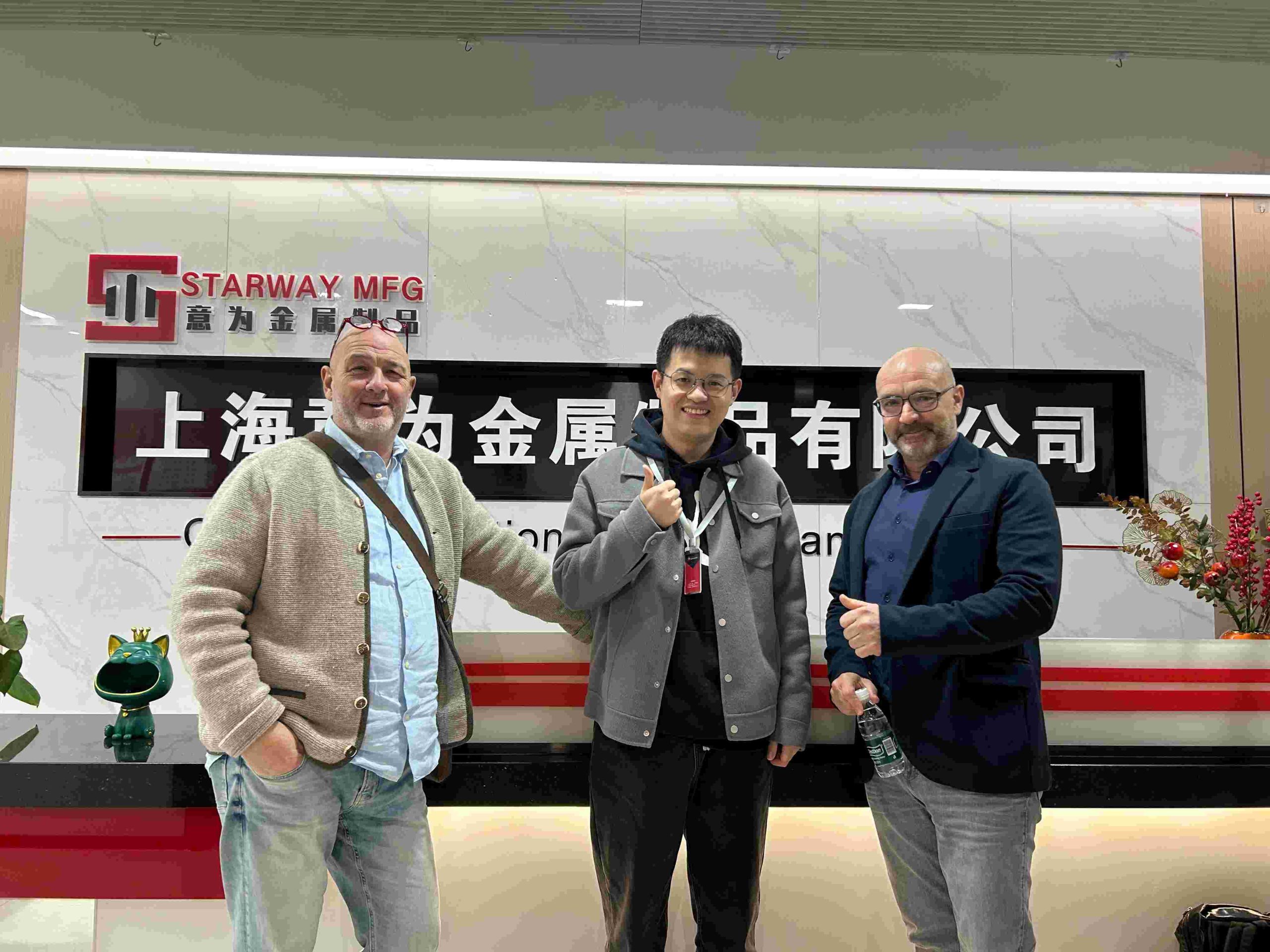
Engineering, production and the customer in one review. Delivery information arrives first-hand instead of being relayed.
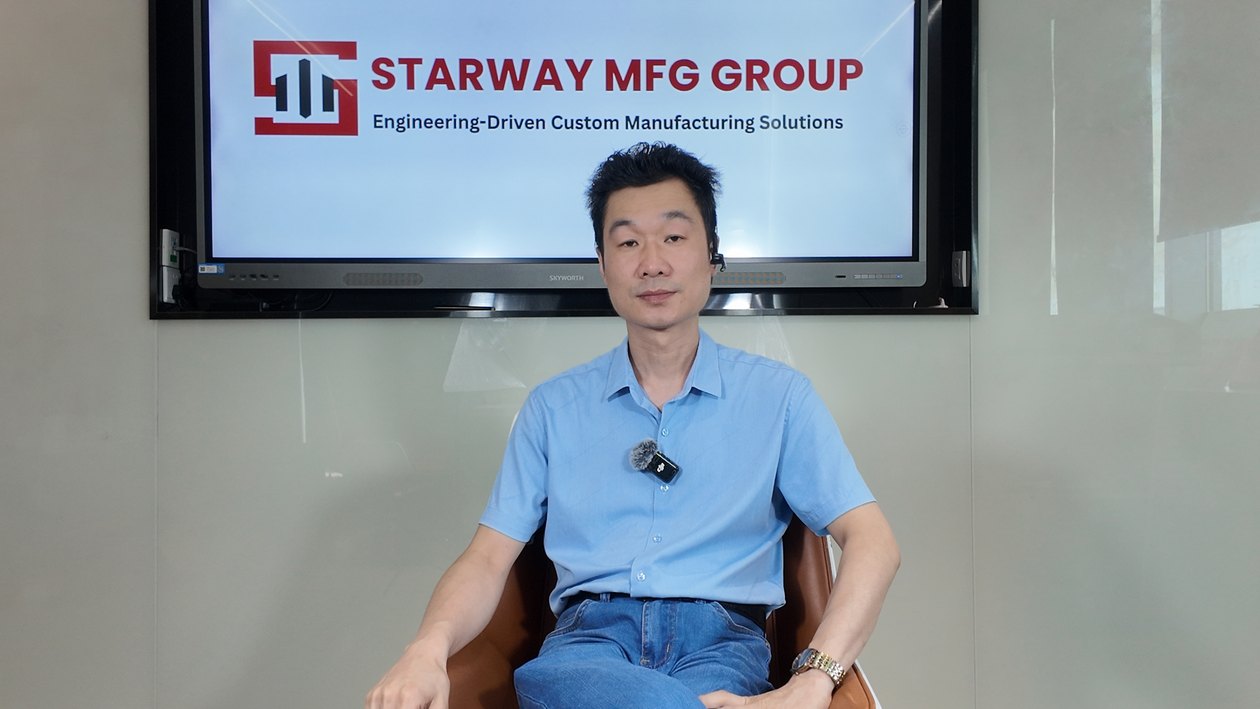
CEO CASE STUDY VIDEO
From 80% to 95%+: How We Fixed the Delivery Problem
The STARWAY CEO explains what was causing our delivery failures, why the root cause was information rather than capacity, and the three operational changes that followed.
When an order runs late, the instinctive explanation is capacity. Sometimes that is correct. More often, in custom manufacturing, the delay was visible internally well before the customer heard about it — the information simply never travelled.
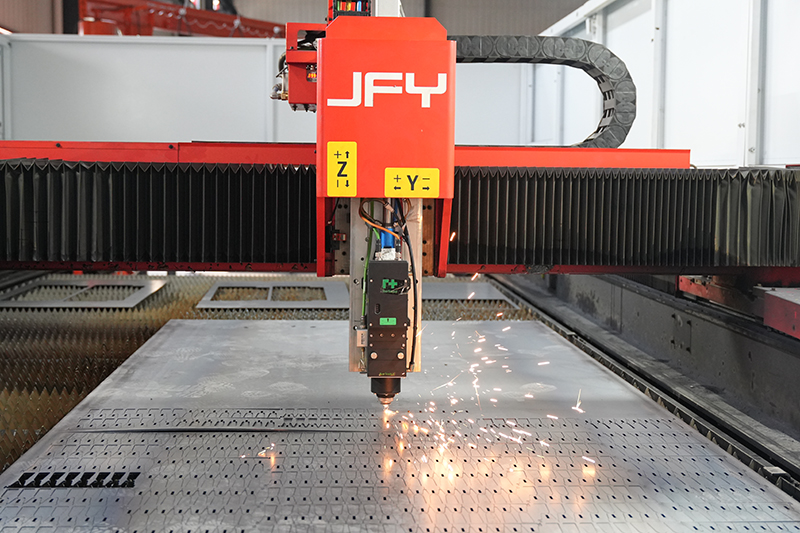
This matters far more for an overseas buyer than a domestic one. You cannot walk onto the shop floor and look at the job. Everything you know arrives through someone else’s reporting, which means the quality of that reporting effectively is your visibility. Custom work compounds it: a catalogue item has a stable cycle time, while a custom part carries variables in material, tooling, routing across laser cutting, CNC bending and welding, first-article approval, and finishing.
| Where delays originate | What it looks like inside the factory | What the buyer usually sees | Why the gap matters to you |
|---|---|---|---|
| Material or stock availability | PO placed, mill delivery pushed two weeks | Nothing — original date still quoted | The earliest and most recoverable delay type, if you hear about it in week one |
| Tooling or fixture readiness | Mold trial or fixture rework pushed past its slot | Nothing until first-article stage | Affects mold-dependent work most; see mold design |
| Process routing conflict | Two jobs contending for the same press brake | Nothing — both jobs quoted normally | Resolvable by resequencing if flagged early, not if flagged late |
| First-article or inspection hold | FAI finds a dimension out of tolerance, part re-runs | Silence, then a late shipment | Quality holds are legitimate — but they should be reported, not absorbed |
| Finishing or outsourced operation | Plating or coating vendor queue extends | Nothing | Often the least-visible step and the most frequently underestimated |
A late order can involve production, scheduling, engineering, purchasing, quality, or logistics. When responsibility is shared across all of them, it belongs to none of them in practice. We established the Order Center as the single department accountable for delivery-related problems, working alongside our project management function.
A delivery date is only a commitment if a realistic production plan sits underneath it. We stopped optimising for confident-sounding dates and started optimising for the best available plan plus a Plan B. The goal was never to pretend production runs without incident — it was to know what to do when it does not.
The most damaging failure mode was a customer discovering a problem only after the promised date had passed. By then the buyer has committed to assembly schedules, inventory, onward shipments, and their own customer promises. A supplier delay does not stay with the supplier; it propagates into the buyer’s planning and becomes their cost.
Three concrete changes followed. They are deliberately unglamorous, which is rather the point: delivery reliability is an operating discipline, not a technology purchase.
| Change implemented | What it does | What it fixed | What it means for you as a buyer |
|---|---|---|---|
| A dedicated Order Center | One department owns all delivery problems and cross-functional coordination | The accountability gap between production, purchasing, quality and sales | A named team is responsible for your order — not only the salesperson who took it |
| Production schedule meetings twice a week | Scheduled internal review synchronising status across departments | Delivery risk sitting undetected inside one function | Status you receive comes from a current review, not one person’s recollection |
| Weekly production status reports | Structured reporting built on real on-site conditions | Ad-hoc updates triggered only by customer chasing | A regular reporting rhythm, so you do not have to chase for visibility |
For an overseas customer the third item matters most day to day. What a buyer needs is not reassurance but four facts: where the order is, what stage production has reached, whether a delivery risk exists, and what the current plan is. A weekly report answering those four removes most email chasing. These changes run on top of our existing quality control process — incoming verification, first-article inspection, in-process checks, final and pre-shipment inspection — because a quality hold is a delivery event and should be communicated as one.
After implementing these changes, STARWAY reached 95%+ On-Time Delivery and a 50% reduction in customer complaints. The complaint figure is the more revealing of the two. Complaints did not halve because every order suddenly ran to plan — manufacturing does not work that way. They halved because customers stopped being surprised. A delay that arrives with context, a revised plan, and lead time to react generates a conversation; the same delay arriving as a missed ship date generates a complaint.

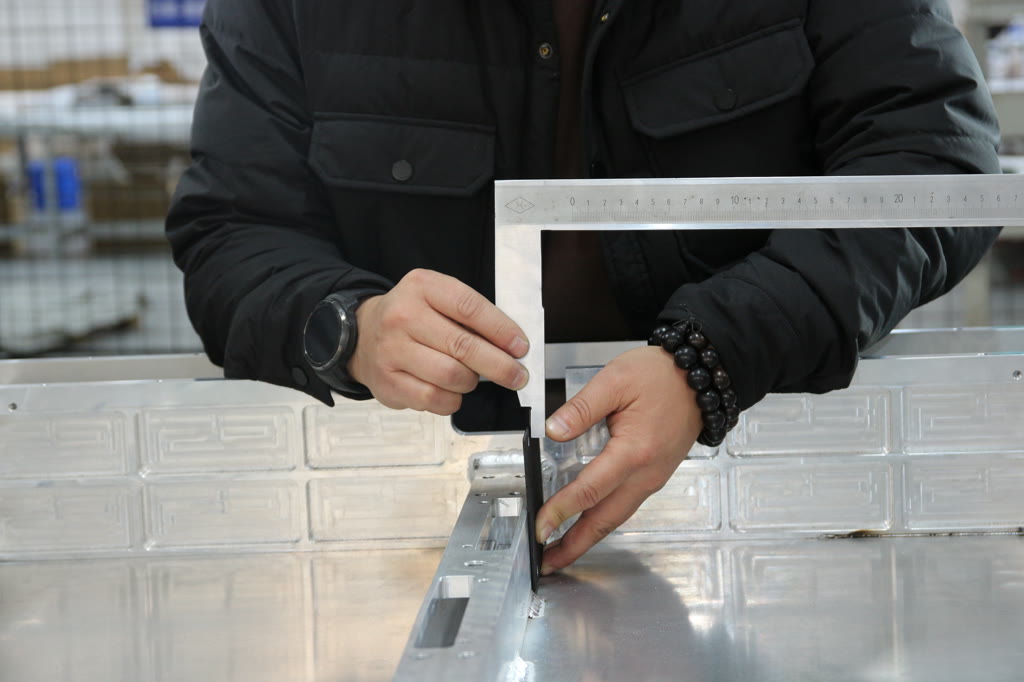
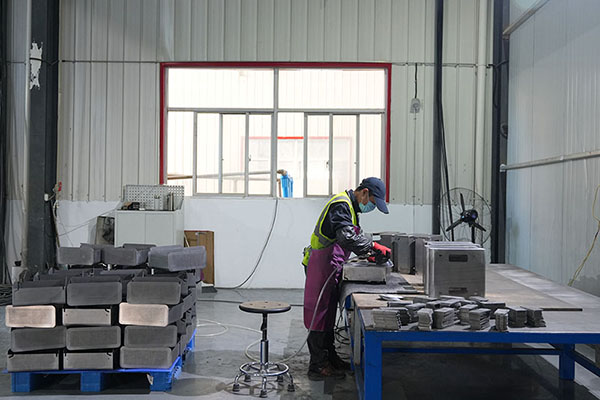
Marking up the drawing before the job reaches the floor. A problem caught at the desk is cheaper than a quality hold, and a quality hold is a delivery event.
Buyers usually compare unit price, tooling cost, MOQ, capacity, certifications, materials, finishes and machining capability. All necessary. But delivery performance deserves equal scrutiny, and it is routinely assessed with a single yes/no question no supplier will ever answer with “no”.
| Buyer evaluation factor | What to ask a supplier | Why it matters |
|---|---|---|
| Historical delivery data | “What was your actual OTD over the past six months?” | Past performance is evidence; a promise about future performance is not. A supplier who measures OTD at all is ahead of one who does not |
| Order ownership | “Who is responsible for my order after the PO is placed?” | Determines whether a coordinating function exists or one salesperson is the entire process |
| Escalation behaviour | “What happens when something goes wrong?” | Reveals a defined response versus improvisation. Ask for a recent real example |
| Reporting rhythm | “How often will I receive status, and in what format?” | A scheduled report means visibility is a process; an on-request update means visibility depends on you chasing |
| Plan B capability | “If the primary route is blocked, what alternatives exist in-house?” | Multi-process suppliers reroute internally; single-process shops subcontract, adding time and reducing control |
| In-house versus outsourced | “Which operations run in-house?” | Every outsourced step is a handoff, a queue, and a visibility gap. See shipping and delivery |
| Quality-hold communication | “If an FAI fails, when do I hear about it?” | A supplier who absorbs quality events quietly is managing your perception, not your order |
One practical note on the first question: if a supplier cannot produce a delivery figure, that is itself an answer. It usually means OTD is not tracked as a managed metric, which makes any commitment about future dates an estimate rather than a measurement.
Not getting straight answers about your current order?
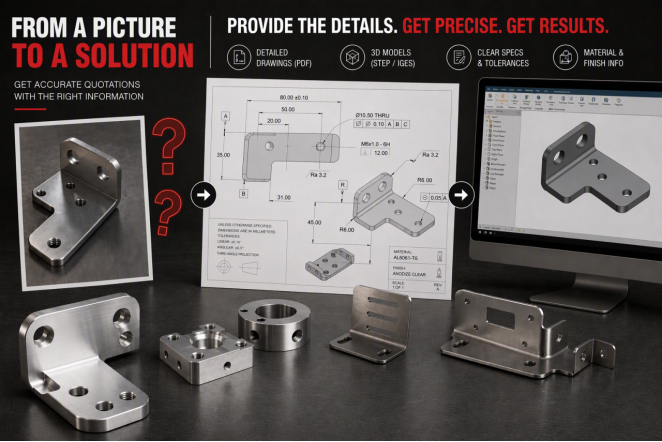
Send us your drawings and requirements. You will receive a free DFM review, a quotation, and a clear statement of the production route and realistic lead time — before you commit.
Delivery risk is not uniform. Each process carries a different dominant variable, and knowing which applies to your part tells you where to focus during supplier discussions.
| Project type | Typical lead-time driver | Key variables | What to confirm before you commit |
|---|---|---|---|
| Sheet metal fabrication | Multi-step routing across cutting, bending, welding, finishing | Sheet availability, routing sequence, finishing queue | Whether every step runs in-house and how the routing is sequenced |
| CNC machining | Machine availability plus programming and setup | Axis requirement, tolerance-driven inspection cycles | Whether milling and turning are both in-house, and the inspection method |
| Plastic injection molding | Tooling build — commonly longer than the production run itself | Mold trial and revision rounds, tooling ownership | The mold build schedule and how many trial rounds are included; see injection molding |
| Prototyping and low volume | Iteration cycles, not throughput | Drawing revisions, approval turnaround | How many revision rounds are included; see rapid prototyping |
| Assembly and finished units | Component convergence — the slowest sub-part sets the date | Sub-component control, packaging readiness | Whether the supplier controls all sub-components or waits on third parties |
| Surface finishing | Outsourced vendor queues and batch minimums | Batch size, finish type | Which finishes are in-house versus subcontracted, and the vendor queue length |
The pattern worth noticing: the highest delivery risk sits at the handoffs, not inside any single operation. An order passing through four suppliers has four queues and four points where information can stop moving. That is the practical argument for consolidating processes with one partner — not that any individual step runs faster, but that the handoffs stay visible.
Sector requirements shift the emphasis again. Aerospace and medical programmes carry documentation and inspection obligations that extend timelines predictably, while automotive and robotics and automation work is schedule-driven against an assembly line. Green energy, electrical and electronics and building applications each have their own cadence.
STARWAY MFG GROUP has provided engineering-driven custom manufacturing since 2012, delivering 5,000+ custom projects for 500+ customers across Europe, Australia and North America under an ISO 9001:2015 quality management system with MES traceability. The delivery-management approach described above applies across every capability below.
| Capability area | Best-fit parts | Buyer value for delivery | Related STARWAY page |
|---|---|---|---|
| Sheet metal fabrication | Enclosures, brackets, chassis, panels | Cutting, bending, welding and finishing under one roof, so routing conflicts are resolved internally | Sheet Metal Fabrication · Stamping |
| CNC machining | Precision components, shafts, housings | Milling and turning in-house removes a supplier handoff mid-route | CNC Machining · CNC Grinding |
| Plastic injection molding | Housings, covers, moulded assemblies | Mold design and moulding coordinated together, so tooling slips surface early | Plastic Injection Molding · 3D Printing |
| Assembly and finished units | Multi-process assemblies, packaged units | One party owns component convergence rather than coordinating three vendors | Assembly · Packaging |
| Engineering and programme support | New designs, DFM-sensitive parts | Design issues caught before production rather than at first article | Design Engineering · Project Management |
We operate One Center and Two Bases: a Shanghai engineering and project management centre, a Nantong base for rapid prototyping and flexible manufacturing, and a Jingdezhen base for mass production. Moving a programme from prototype to volume therefore stays inside one organisation, which is where delivery visibility is most often lost. Recent work is shown in our case studies.
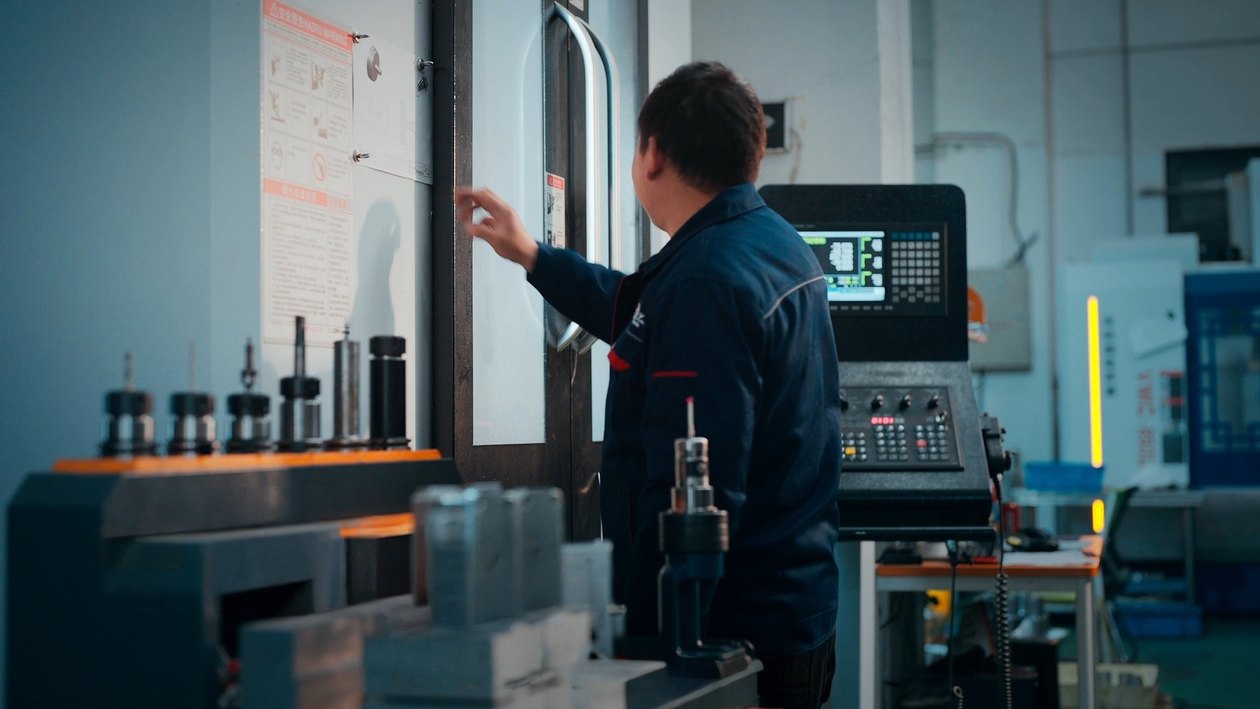
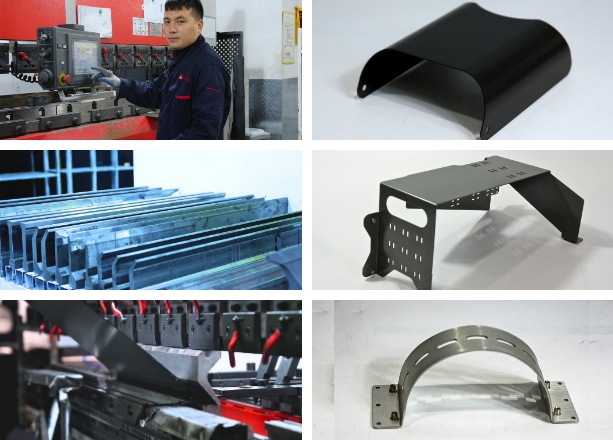
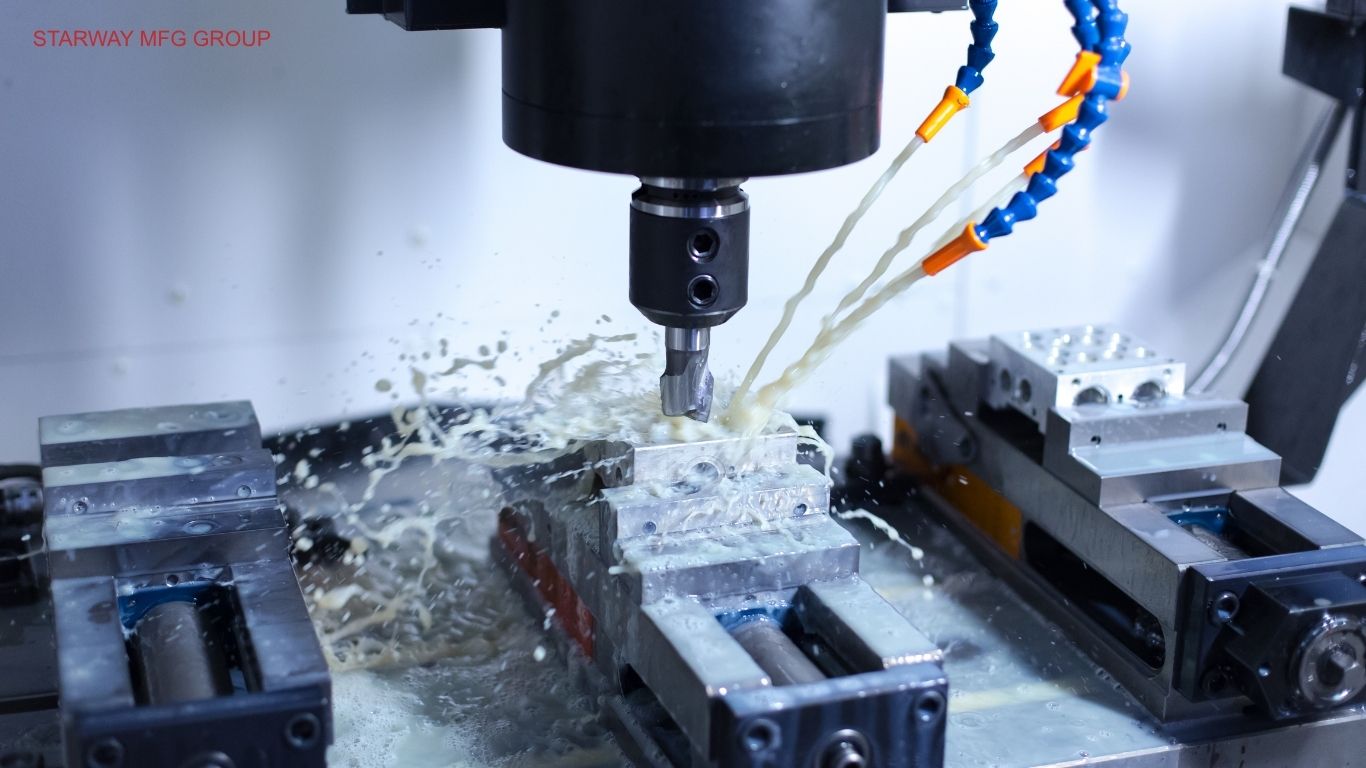
Setting up a CNC job in-house. Sheet metal, CNC machining, injection molding and assembly all run under one roof, so routing conflicts are resolved internally rather than across suppliers.
Take this list into your next supplier conversation. The answers will tell you more about delivery risk than any capability brochure.
The eighth question is the most revealing. A supplier who cannot recall a single late order is either very new or not being straight with you.
Improving on-time delivery in manufacturing is not always a capacity question. Frequently the larger opportunity sits in information flow, clear ownership, realistic planning, internal coordination, and honest customer communication. Our own experience moved OTD from roughly 80% to 95%+ while complaints fell by half — achieved through the Order Center, twice-weekly production schedule meetings, and weekly production status reports rather than additional equipment.
A production problem does not, on its own, indicate an unreliable manufacturer. Early information creates options: resequence your own production, change shipping mode, prioritise critical components, or adjust inventory. Arriving after the original ship date, most of those options have expired. Transparency does not make a delay disappear — it converts a delay from something that happens to you into something you can plan around.
For overseas purchasers the takeaway is practical: do not evaluate a supplier on price alone. Ask about measured delivery performance, who owns your order, how status reaches you, and what happens when something goes wrong. Further reading: what CNC machining involves and our FAQs.
OTD is the percentage of orders shipped on or before the committed date in a given period. Definitions vary: some suppliers measure against the original confirmed date, others against the most recently revised date, which typically flatters the figure by 5–15 percentage points. Always ask which baseline is used before comparing two suppliers.
There is no universal benchmark, but a supplier reporting below 85% against the original confirmed date usually has a process problem rather than a bad month. What matters more is whether OTD is measured systematically and the trend is visible. STARWAY moved from approximately 80% to 95%+.
Through three operational changes rather than capacity expansion: the Order Center as the single department accountable for delivery problems, production schedule meetings twice a week, and weekly production status reports built from real on-site conditions. OTD moved from around 80% to 95%+ and complaints fell 50%.
Common causes are material availability, tooling readiness, routing conflicts between jobs competing for the same equipment, first-article holds, and queues at outsourced finishing vendors. Most are ordinary events — the damage comes from late communication rather than the delay itself.
Weekly is a reasonable expectation for active custom orders, with immediate notification for any event that moves the delivery date. A useful report answers four questions: where the order is, what stage production has reached, whether a delivery risk exists, and what the current plan is.
Tooling build commonly runs 3–8 weeks depending on cavity count, complexity and steel selection, plus 1–3 trial and revision rounds before production release. This front-end stage often exceeds the production run itself, so confirm the mold schedule and the number of included trials before you place the order.
Ask for actual OTD over the past six months and how it is measured; who owns the order after the PO; reporting frequency and format; which operations are in-house; and for a specific recent example of a late order and how it was handled. The last question is usually the most informative.
Not necessarily. Every manufacturer encounters production problems. The stronger indicator is response: whether you are told promptly, whether a revised plan and an alternative are offered, and whether the explanation reflects the real situation.
Injection molding carries the longest front-end risk because tooling build dominates the timeline. Assembly orders carry convergence risk, since the slowest sub-component sets the ship date. In every case, risk concentrates at handoffs between operations or suppliers.
It can, though not because individual operations run faster. An order crossing four suppliers has four queues and four points where information can stop moving. STARWAY runs sheet metal fabrication, CNC machining, injection molding and assembly in-house across three sites.
Directly — a quality hold is a delivery event. If first-article inspection finds an out-of-tolerance dimension, the part re-runs and the schedule moves. STARWAY operates incoming verification, FAI, in-process checks, final and pre-shipment inspection under ISO 9001:2015.
Send your 2D drawings or 3D files, target quantity, material, tolerances, surface finish and required delivery date through our contact page. You will receive a free DFM review alongside the quotation, with manufacturability and lead-time risks identified up front — including realistic lead time as distinct from best case.
Talk to an engineering-driven manufacturing partner
If your current supplier cannot answer “Where is my order?” clearly and quickly, it may be time for a different conversation.
STARWAY MFG GROUP provides engineering-driven custom manufacturing solutions for global OEM customers, operating as Shanghai Starway Engineering & Manufacturing Co., Ltd. Capabilities cover metal and plastic manufacturing in a single supply chain — cut, bend, weld, finish, assemble and ship. [email protected] · www.starwaymfg.com · Contact us
Meta Description: Learn how STARWAY improved on-time delivery from 80% to 95%+ by improving production information, accountability, scheduling, and customer communication.
Recommended Slug: /blogs/on-time-delivery-manufacturing/

This website uses cookies to provide you with a personalized browsing experience and analyze website traffic. By clicking "Accept", you agree to our use of cookies.



 Global