
Sheet Metal Fabrication Design Engineering Project management Assembly Rapid Prototyping Packaging Shipping & Delivery
CNC Machining Design Engineering Project management Assembly Rapid Prototyping Packaging Shipping & Delivery
Plastic Injection Molding Design Engineering Project management Assembly Rapid Prototyping Packaging Shipping & Delivery
TECHNICAL GUIDE | STARWAY MFG GROUP
By Alyssa / September 16, 2026
Contents
For global OEMs and engineering teams, sheet metal fabrication services are not just a purchasing category; they are a production strategy for turning flat metal, tubes, and formed components into reliable assemblies at the right cost, tolerance, and lead time. STARWAY MFG GROUP provides custom sheet metal fabrication for customers in Europe, Australia, and North America, supporting projects from early design review to repeat production and export delivery.
This guide is written for engineers, procurement managers, and product designers who need a practical way to evaluate capability, materials, tolerances, cost drivers, lead time, and supplier fit before placing an RFQ.
If you need a basic overview of the process, start with What Is Sheet Metal Fabrication? and then return to this buyer-focused article. For service sourcing, the more important question is not simply what sheet metal fabrication is; it is whether your supplier can combine cutting, bending, welding, finishing, inspection, and shipment into one controlled manufacturing workflow.
As an engineering-driven contract manufacturer, STARWAY supports custom sheet metal fabrication together with CNC machining, plastic injection molding, assembly, and packaging. That mix is useful when one product family includes sheet metal housings, machined inserts, plastic covers, welded frames, and final kitted assemblies.
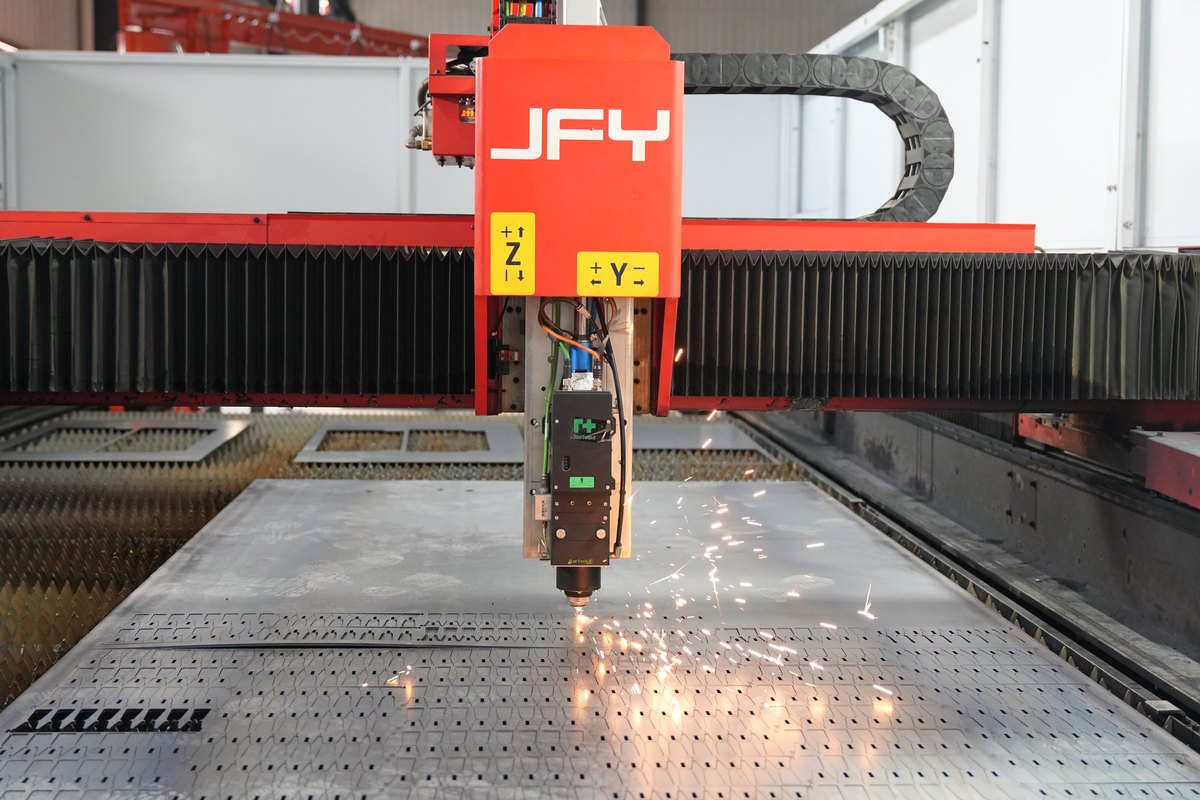
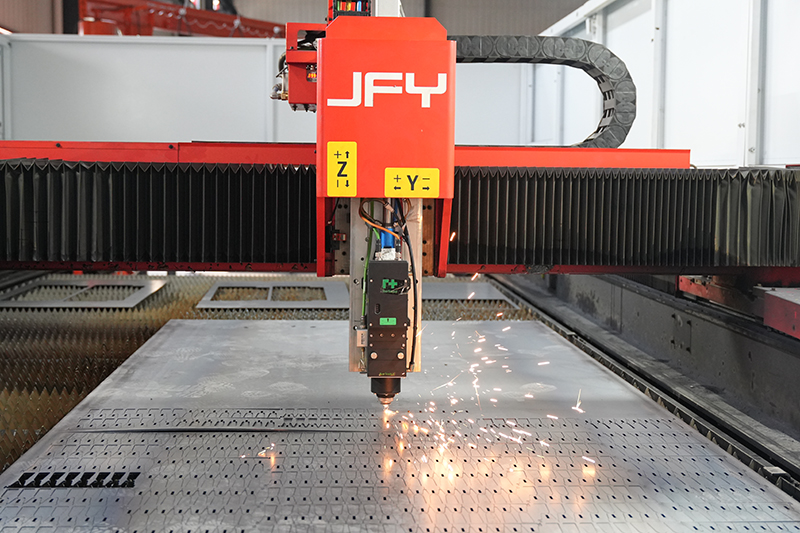
Cutting is where a sheet metal job starts. Nesting efficiency here sets material cost for the whole order.
A capable sheet metal fabrication supplier should connect cutting, bending, welding, finishing, inspection, and packing into one controlled workflow. The table below shows the capabilities buyers should verify first.
| Capability | Typical use | Buyer check point |
|---|---|---|
| Laser cutting / tube laser cutting | Flat plates, brackets, covers, ventilation panels, round or rectangular tube frames | Ask about material thickness range, edge quality, nesting efficiency, and tube profile limits. |
| CNC bending / press brake bending | Enclosures, U-brackets, covers, chassis, cabinet parts | Confirm bend radius, tooling availability, bend sequence review, and tolerance control after forming. |
| Metal stamping | Repeat parts, clips, small brackets, louvered panels, higher-volume components | Check tooling cost, expected production quantity, material utilization, and repeatability. |
| Welding MIG / TIG / spot | Frames, cabinets, stainless assemblies, aluminum weldments, resistance-welded sheet parts | Review weld size, distortion control, cosmetic requirements, and inspection method. |
| Grinding, polishing, finishing | Visible panels, stainless covers, brushed parts, painted or coated assemblies | Define surface grade, edge break, coating standard, and packaging protection. |
Laser cutting services are often the starting point for precision sheet metal fabrication because they reduce tooling cost and make design revisions easier. Sheet metal laser cutting is well suited for stainless steel panels, aluminum covers, carbon steel brackets, perforated plates, and custom blanks with complex profiles. For tubing, tube laser cutting can cut holes, miters, slots, and end profiles before welding, reducing manual layout work and improving frame fit-up.
Buyers should ask about thickness range, kerf compensation, burr control, hole-to-edge limits, and nesting efficiency. These details directly affect cost, accuracy, and prototype speed.
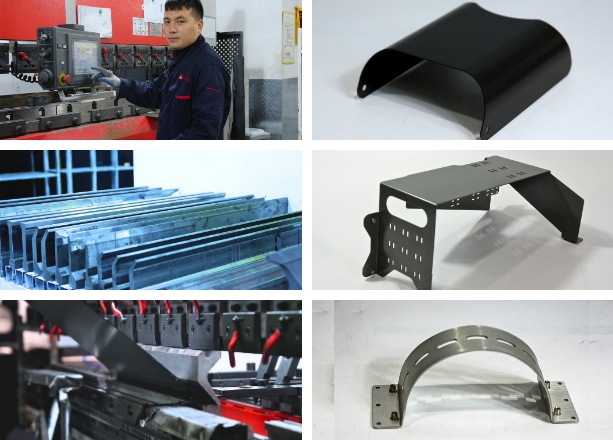
CNC bending and press brake bending convert flat blanks into functional parts such as enclosures, trays, brackets, channels, and panels. Good bending work starts before the press brake: the engineering team should check bend reliefs, flange length, inside radius, grain direction, hole positions near bends, and tooling clearance. Tube bending follows the same logic: the bend must support the product structure without causing ovality, wrinkles, or poor assembly fit.
For many formed brackets and covers, ±0.2 to ±0.5 mm is realistic depending on material, thickness, part size, and number of bends. Critical hole patterns may need fixture checking.
Metal stamping services become attractive when the design is stable and the production quantity justifies tooling. Stamping can reduce unit cost for repeat clips, small brackets, shielding plates, washers, covers, and formed components. The tradeoff is upfront die cost and less flexibility after the tool is made.
The decision is mainly lifecycle cost: laser cutting is flexible for prototypes, while stamping can reduce unit price after annual demand and design stability are clear.
Sheet metal welding connects parts into frames, enclosures, brackets, tanks, and assemblies. MIG welding is common for steel structures and thicker sections, while TIG welding is often preferred for stainless steel fabrication and aluminum assemblies that need cleaner bead control. Spot welding can be efficient for overlapping sheet parts where speed and consistency matter.
Specify whether welds should be ground flush, left as-welded, sealed, leak-tested, or polished. A strong manufacturer should discuss weld cosmetics as well as strength.
Grinding and polishing complete the appearance and safety of a part. Edge deburring protects users and installers, while brushed stainless steel, polishing, powder coating, anodizing, plating, and painting can improve corrosion resistance and brand appearance. Finishing should be discussed before production because masking, hanging holes, weld cleanup, and packaging can all affect the final result.
For export work, surface protection is also a logistics issue. Painted, polished, and coated parts need film, foam, cartons, or wooden cases to prevent scratches and deformation.
Material selection affects strength, corrosion resistance, weight, forming behavior, surface finish, cost, and lead time. A sheet metal fabrication company should help you select a grade that matches the product environment rather than simply quoting the cheapest available sheet. Review the broader materials database for related metals and plastics.
| Material family | Common grades | Best-fit applications | Selection notes |
|---|---|---|---|
| Stainless steel fabrication | 304, 316, 201, 301 | Medical covers, food equipment, electronics housings, outdoor panels | 304 is a common general choice; 316 offers better corrosion resistance in marine or chemical environments. |
| Aluminum sheet metal fabrication | 5052, 6061, 6063 | Lightweight enclosures, panels, brackets, covers, transportation parts | 5052 forms well; 6061 offers higher strength but needs careful bend design. |
| Steel sheet metal fabrication | Cold-rolled steel, carbon steel | Brackets, chassis, cabinets, frames, structural covers | Often cost-effective; usually needs painting, plating, or powder coating for corrosion protection. |
| Galvanized / pre-coated steel | GI, SECC, SGCC | HVAC, construction panels, electrical cabinets, appliance components | Good corrosion resistance, but welding and cut edges need attention. |
| Copper / brass | C110 copper, C260 brass, C360 related hardware | Conductive parts, decorative components, connectors, shielding | Higher material cost; specify cosmetic and conductivity requirements early. |
Match the drawing callout with the use environment. Aluminum helps reduce weight, steel often controls cost, and stainless steel is usually worth the premium for hygiene or corrosion resistance.
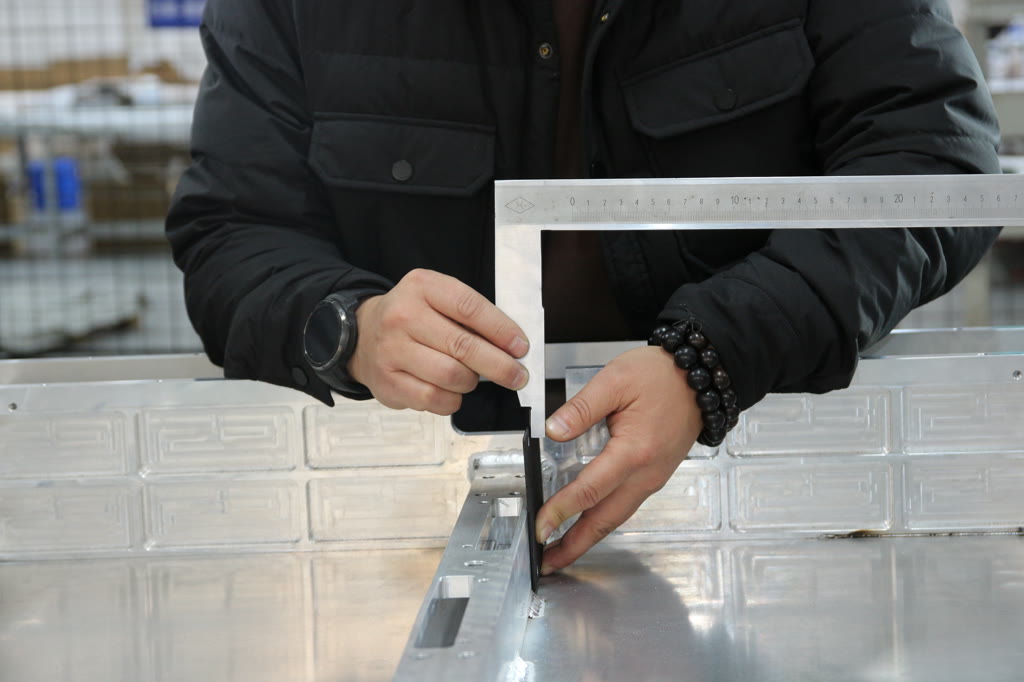
Sheet metal fabrication tolerances must reflect the process. Laser-cut profiles can be very precise, but bending, welding, and finishing introduce variation. A reliable supplier will separate critical-to-function dimensions from general dimensions and use inspection methods that match the part geometry. For ISO 9001 sheet metal work, documentation and repeatable process control matter as much as the machine list. Learn more about STARWAY quality control on the quality page.
| Feature / process | Realistic production tolerance | Notes for drawings and RFQs |
|---|---|---|
| Laser-cut profile dimensions | Typical ±0.10 to ±0.20 mm | Depends on thickness, material, part size, and hole diameter. |
| Hole-to-hole position before bending | Typical ±0.10 to ±0.20 mm | More stable before forming; critical patterns should be clearly marked. |
| CNC bending angle | Typical ±0.5° to ±1.0° | Affected by material springback, thickness variation, tooling, and bend length. |
| Formed dimensions after bending | Typical ±0.20 to ±0.50 mm | Tighter control may require fixtures, special tooling, or inspection planning. |
| Welded assembly dimensions | Typical ±0.50 to ±1.50 mm | Depends on assembly size, fixture design, weld heat, and post-weld finishing. |
| Surface finish / coating thickness | Per finish specification | Powder coating, plating, anodizing, and brushing need agreed appearance and test criteria. |
Common surface finishes include powder coating, liquid painting, anodizing for aluminum, brushing for stainless steel, polishing, zinc plating, nickel plating, passivation, and black oxide for selected steel components. When a part is cosmetic, provide photos, texture standards, color references, gloss level, acceptable scratch limits, and packaging requirements. When a part is functional, specify coating thickness, corrosion tests, conductivity, grounding areas, or masked surfaces.
A practical inspection flow includes material verification, first article inspection, in-process checks, final dimensional inspection, surface review, and pre-shipment documentation.
Sheet metal fabrication for automotive, aerospace, medical, electronics, building systems, green energy, and automation projects can look similar at first glance, but each industry has different risks. Some parts are cosmetic, some are structural, some need grounding, some need corrosion resistance, and others must support assembly speed in the customer factory.
| Industry | Typical custom sheet metal parts | Important buyer priorities |
|---|---|---|
| Automotive | Brackets, battery covers, test fixtures, panels, protective guards | Repeatability, PPAP-style documentation when required, coating durability, cost control |
| Aerospace | Lightweight brackets, covers, panels, support frames | Material traceability, weight reduction, tight documentation, reliable inspection |
| Medical | Stainless covers, carts, device housings, cleanable panels | Surface finish, corrosion resistance, clean edges, stable documentation |
| Electrical & electronics | Enclosures, chassis, control boxes, panels, shielding parts | Hole accuracy, grounding, EMI considerations, powder coating, assembly fit |
| Building / construction | Panels, brackets, HVAC parts, decorative covers, frames | Durability, finish consistency, packaging, outdoor performance |
| Green energy | Mounting brackets, inverter housings, battery cabinets, frames | Corrosion resistance, structural strength, repeat supply, export packaging |
| Robotics & automation | Machine guards, frames, brackets, sensor mounts, covers | Fit-up, fast revisions, mixed-process assemblies, stable tolerances |
The better supplier is not always the lowest quoted price. Look for the team that prevents late engineering changes, controls finishing quality, and communicates clearly during export delivery.
CNC press brake bending at STARWAY MFG GROUP.
Many OEM products begin with sheet metal prototyping and then move through low volume sheet metal fabrication before production stabilizes. The first prototype proves the geometry, the second or third revision improves manufacturability, and the pilot batch tests assembly, finishing, packing, and field feedback. This staged approach reduces risk before tooling or large-volume orders are committed.
For early-stage projects, rapid sheet metal prototyping can validate geometry, assembly fit, and surface finish before production. Once the design is stable, the focus shifts to fixtures, inspection points, material utilization, and packaging.
Design for sheet metal is most effective before drawings are frozen. Small changes such as increasing an inside bend radius, moving a hole away from a bend, adding relief cuts, standardizing material thickness, or changing a welded corner to a tab-and-slot design can lower cost and improve repeatability. Buyers can involve design and engineering support early to avoid expensive revisions later.
When engineers ask how to choose a sheet metal fabrication company, the answer should be based on project fit. A good supplier must understand drawings, control process risk, communicate clearly, and deliver consistent parts across batches. STARWAY MFG GROUP combines sheet metal fabrication services with CNC machining, injection molding, assembly, project management, and shipping support, which helps OEM buyers reduce supplier fragmentation.
| Buyer evaluation factor | What to ask a supplier | Why it matters |
|---|---|---|
| Engineering review | Can you review DFM, tolerances, bend feasibility, welding access, and finish risk before production? | Early review reduces redesigns, scrap, and delivery delays. |
| Process coverage | Can you provide cutting, bending, welding, finishing, hardware insertion, assembly, and packing? | One-stop coordination lowers handoff risk and improves accountability. |
| Quality system | Do you follow ISO 9001 procedures, first article inspection, in-process checks, and final reporting? | Documented control supports repeat orders and international OEM expectations. |
| Communication | Can your team discuss drawings, revisions, packaging, and logistics in clear English? | Procurement teams need fast decisions across time zones. |
| Scalability | Can the same route support prototype, low-volume, and repeat production? | A scalable route avoids supplier changes after the design is approved. |
For assemblies, buyers may also need assembly services, project management, and shipping and delivery support. This is especially useful for sheet metal enclosures, brackets, panels, chassis, machine guards, and export-ready kits that combine fabricated metal parts with purchased hardware, labels, foam, or final cartons.
To get a sheet metal quote quickly, provide 2D drawings, 3D CAD files, annual volume, target lead time, material grade, finish, critical dimensions, inspection requirements, packaging needs, and destination country.
Sheet Metal Parts We Produce
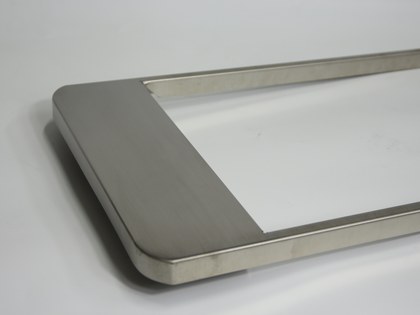
Brushed Stainless Bezel |
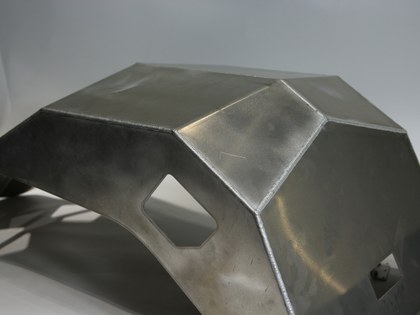
Welded Aluminium Enclosure |
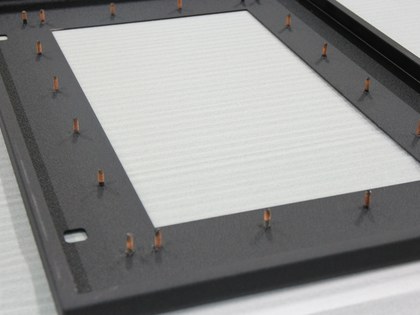
Powder Coated Frame with PEM Studs |
Ready to discuss your project?
Ready to discuss custom sheet metal parts? Contact STARWAY MFG GROUP for a project review or sheet metal fabrication quote.
The right sheet metal fabrication services partner helps turn drawings into stable, inspectable, cost-effective parts. Engineers get fewer manufacturability surprises, procurement teams get clearer quoting, and designers get choices that support production reality.
STARWAY MFG GROUP supports global OEMs with custom sheet metal fabrication, precision sheet metal fabrication, finishing, assembly, and export delivery. Whether your project starts with a prototype bracket, a low-volume enclosure, a stainless steel panel, or a production-ready chassis, involving the manufacturing team early is the most reliable way to improve cost, quality, and lead time.
Cost depends on material, thickness, part size, tolerances, cutting time, bend complexity, welding, finish, inspection, packaging, and quantity. Send drawings, CAD files, quantity, finish, and destination for a faster quote.
Common choices include stainless steel 304/316, aluminum 5052/6061, cold-rolled steel, galvanized steel, copper, and brass. Selection depends on strength, weight, corrosion resistance, appearance, conductivity, and budget.
Laser-cut features often reach about ±0.10 to ±0.20 mm. Formed dimensions commonly range from ±0.20 to ±0.50 mm, while welded assemblies may need wider tolerances depending on size and heat distortion.
Sheet metal fabrication cuts, bends, stamps, welds, and finishes sheet or tube materials. CNC machining removes material from solid blocks or bars for precise features. Some products use both. CNC page: https://www.starwaymfg.com/capabilities/cnc-machining/.
Yes. Prototype and low-volume orders help validate geometry, assembly fit, finish, and packaging before scaling. Laser cutting and CNC bending are especially useful before dedicated tooling is justified.
Options include powder coating, wet painting, anodizing, brushing, polishing, zinc plating, nickel plating, passivation, and deburring. The best finish depends on corrosion resistance, appearance, wear, and electrical needs.
Evaluate engineering support, process coverage, tolerance control, inspection, finishing quality, communication, export experience, and the ability to scale from prototype to production.
Lead time depends on material availability, engineering review, cutting, bending, welding, finishing, inspection, and shipping. Share target dates during RFQ so production can be planned early.
Yes. Provide hardware details, assembly requirements, finish expectations, grounding areas, and internal clearance information so fit and finishing risks can be reviewed early.
Send 2D drawings, 3D CAD files, material grade, thickness, finish, quantity, tolerances, inspection needs, packaging requirements, and destination information. Photos or samples help when replacing an existing part.
Ready to discuss your project?
Send us your drawings and requirements. You will receive a free DFM review, a quotation, and a realistic lead time from our engineering team.



This website uses cookies to provide you with a personalized browsing experience and analyze website traffic. By clicking "Accept", you agree to our use of cookies.


 Global