
Sheet Metal Fabrication Design Engineering Project management Assembly Rapid Prototyping Packaging Shipping & Delivery
CNC Machining Design Engineering Project management Assembly Rapid Prototyping Packaging Shipping & Delivery
Plastic Injection Molding Design Engineering Project management Assembly Rapid Prototyping Packaging Shipping & Delivery
TECHNICAL GUIDE | STARWAY MFG GROUP
By Alyssa / September 16, 2026
Contents
Technical Guide / Buyer’s Guide | STARWAY MFG GROUP
Choosing the right cnc machining services partner can decide whether a project moves smoothly from prototype to production—or becomes a cycle of delayed samples, unstable quality, and unexpected cost increases. For engineers, procurement managers, and product designers, the supplier decision is not just about finding a machine shop. It is about selecting a manufacturing partner that understands drawings, tolerances, materials, inspection requirements, and global delivery expectations.
Many buyers start with one question: who can offer the lowest price? After more than 10 years working with machined parts, I have seen that the lowest quote is rarely the safest decision. A low unit price can hide risks such as poor DFM review, weak process control, limited material knowledge, slow communication, or missing inspection documentation. These problems often appear later, when redesigns, urgent rework, and delayed launches cost far more than the original saving.
That is why learning how to choose a cnc machining company is essential for OEM sourcing. A reliable supplier should help you control total cost, not just quote a low number. The right partner should also identify manufacturability risks before cutting material, recommend suitable materials and finishes, and provide clear inspection evidence before shipment.
As a China-based contract manufacturer serving OEM customers across Europe, Australia, and North America, STARWAY MFG GROUP supports CNC machining, sheet metal fabrication, injection molding, rapid prototyping, and assembly. This guide explains seven practical criteria you can use to evaluate a CNC machining company or supplier before placing your next order.
Related service page: cnc machining services
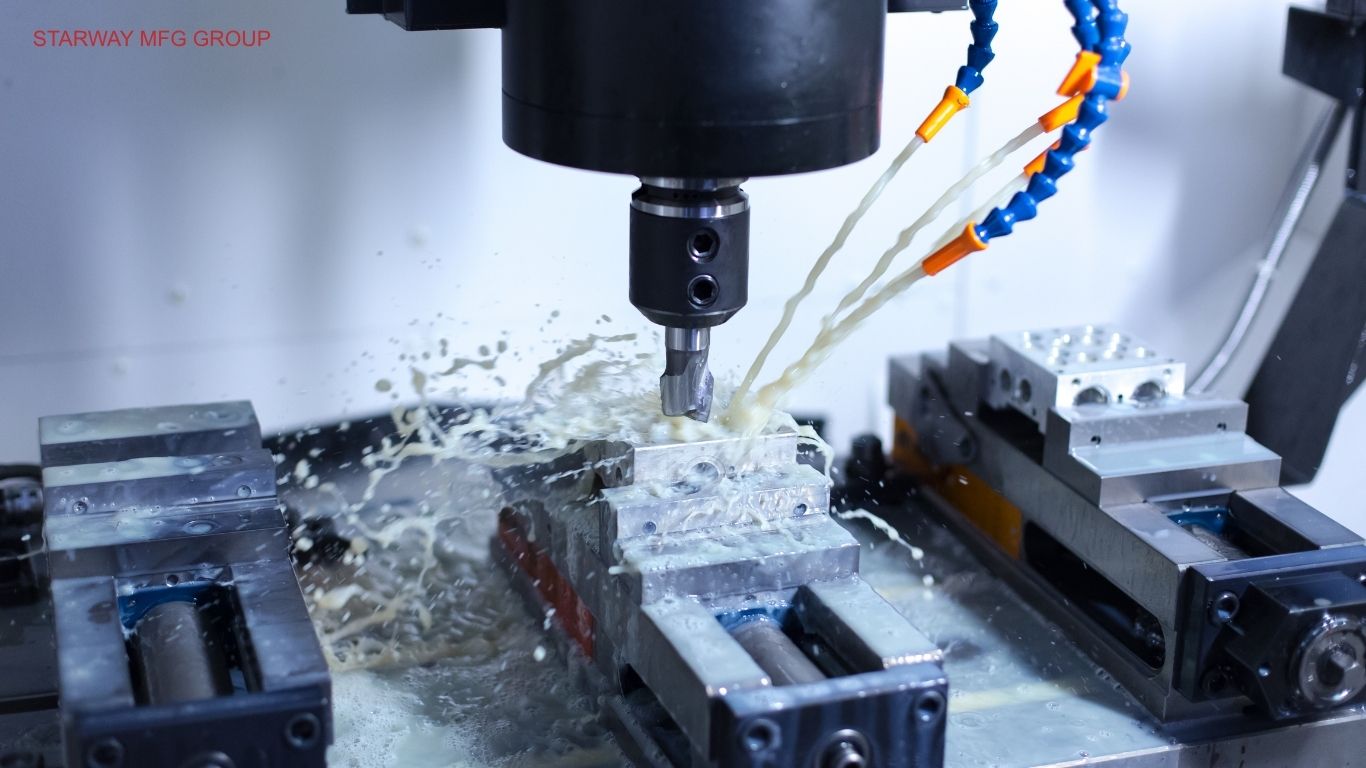
CNC milling in production. Machine availability and setup time are what actually drive a machining quotation.
A CNC machining supplier influences much more than the physical part. The supplier affects early engineering decisions, quotation accuracy, material sourcing, production scheduling, quality control, packaging, and export documentation. If any of these areas is weak, the buyer may face delays or additional cost even when the machining itself looks simple.
For custom manufacturing, the real comparison should be total cost rather than unit price alone. A reliable cnc machining service provider may not always be the cheapest option on paper, but it can reduce project risk through better tolerance control, faster communication, and fewer rejected parts. This is especially important for high-mix, low-volume projects where engineering changes are common and every delay affects product development.
When reviewing quotes, ask yourself whether the supplier has the capability to support the full project—not only the first batch. Can they make prototype parts quickly? Can they scale to low-volume or repeat production? Can they explain why a feature is expensive? Can they provide inspection reports that your engineering team can trust? These questions reveal whether you are dealing with a simple shop or a true manufacturing partner.
| Lowest-Quote Risk | Possible Hidden Cost | Buyer Impact |
|---|---|---|
| No DFM review | Redesign after sampling | Lost engineering time |
| Weak tolerance control | Rework or rejected parts | Delayed assembly |
| Limited material knowledge | Wrong grade or unstable performance | Higher failure risk |
| Poor communication | Slow clarification and late updates | Longer lead time |
| Incomplete inspection | Quality issues found after delivery | Extra incoming inspection cost |
When buyers ask what to look for in a cnc machining company, I recommend evaluating seven areas: machining capabilities, tolerance control, material expertise, quality systems, engineering support, lead time, and communication. These criteria help separate reliable cnc machining services from suppliers that only compete on price.
The first question is whether the supplier has the right machining capabilities for your part geometry. A simple bracket may only require 3-axis milling, while a complex housing, impeller, medical component, or aerospace-style structure may require 4-axis or 5-axis cnc machining services to reduce setups and maintain feature alignment.
A capable CNC machining manufacturer should be able to explain which process is suitable for your part and why. CNC milling services are ideal for prismatic parts, pockets, slots, and flat surfaces. CNC turning services are more efficient for shafts, bushings, pins, and cylindrical components. Grinding may be required when the part needs high flatness, tight thickness control, or improved surface finish.
Buyers should also check whether the supplier can handle both prototype and production needs. Some shops are strong at one-off samples but struggle with repeat orders. Others focus on mass production but are slow with engineering changes. For product development, the best partner can support rapid prototype machining, low volume cnc machining, and repeat production under one quality system.
CNC machining tolerances are one of the biggest drivers of cost, lead time, and quality risk. A professional supplier should not simply say, “Yes, we can do it.” They should ask which dimensions are function-critical, which tolerances can be relaxed, and which inspection method will be used to verify the part.
For many industrial components, a general tolerance of ±0.05 mm is practical and cost-effective. Precision features may require ±0.01 mm. Under controlled conditions, selected critical dimensions can reach ±0.005 mm, but this usually requires stable material, suitable geometry, careful fixturing, and proper inspection equipment such as CMM, height gauges, micrometers, or surface roughness testers.
From a buyer perspective, the best question is not “What is your tightest tolerance?” The better question is: “Can you consistently hold the tolerance my functional features require, and can you document it?” Consistency matters more than a single impressive number.
| Tolerance Level | Typical Range | Common Use Case | Inspection Method |
|---|---|---|---|
| Standard machining | ±0.05 mm | General housings, brackets, covers | Calipers, height gauges |
| Precision machining | ±0.01 mm | Mating features, bearing seats, alignment surfaces | Micrometers, CMM |
| Critical features | ±0.005 mm | Selected high-precision dimensions only | CMM, controlled process checks |
| Surface finish | Ra 1.6–3.2 μm typical | Visible or functional surfaces | Roughness tester |
Material selection directly affects machinability, strength, corrosion resistance, weight, surface finish, and total cost. A strong cnc machining supplier should be able to machine common metals and engineering plastics, but more importantly, they should understand how each material behaves during production.
For example, aluminum cnc machining services often use 6061 because it offers excellent machinability, stable performance, and good corrosion resistance. Aluminum 7075 provides much higher strength but costs more and may require additional surface protection depending on the environment. Stainless steel 304 and 316 are common for corrosion resistance, but they require different cutting strategies than aluminum. Plastics such as POM, nylon, PC, ABS, and PEEK need careful control to avoid deformation, melting, or burrs.
An experienced supplier can help buyers avoid over-engineering. If a part does not need extreme strength, choosing a more machinable material may reduce cnc machining cost and lead time without sacrificing performance. STARWAY MFG GROUP supports a broad range of metals and plastics and provides material recommendations based on function, environment, surface finish, and budget.
| Material | Strengths | Typical CNC Applications |
|---|---|---|
| Aluminum 6061 | Excellent machinability, good corrosion resistance, cost-effective | Housings, brackets, fixtures, automation parts |
| Aluminum 7075 | Very high strength, good fatigue performance | Aerospace-style structures, high-load components |
| Stainless Steel 304/316 | Corrosion resistance, durability | Medical, food equipment, marine or outdoor parts |
| Brass / Copper | Conductivity, machinability, appearance | Electrical parts, fittings, decorative components |
| POM / Nylon / PC / PEEK | Light weight, insulation, wear resistance | Gears, bushings, prototypes, functional plastic parts |
Quality control is where many supplier differences become visible. For OEM projects, ISO 9001 cnc machining is not just a certificate on a website. It should be reflected in document control, incoming material checks, in-process inspection, final inspection, nonconformance handling, and traceability.
A good cnc machining quality control process usually includes First Article Inspection (FAI), in-process dimensional checks, final inspection reports, material certificates when required, and shipment verification. For parts used in assemblies, even small dimensional variation can create installation problems. For export customers, documentation is often as important as the part itself.
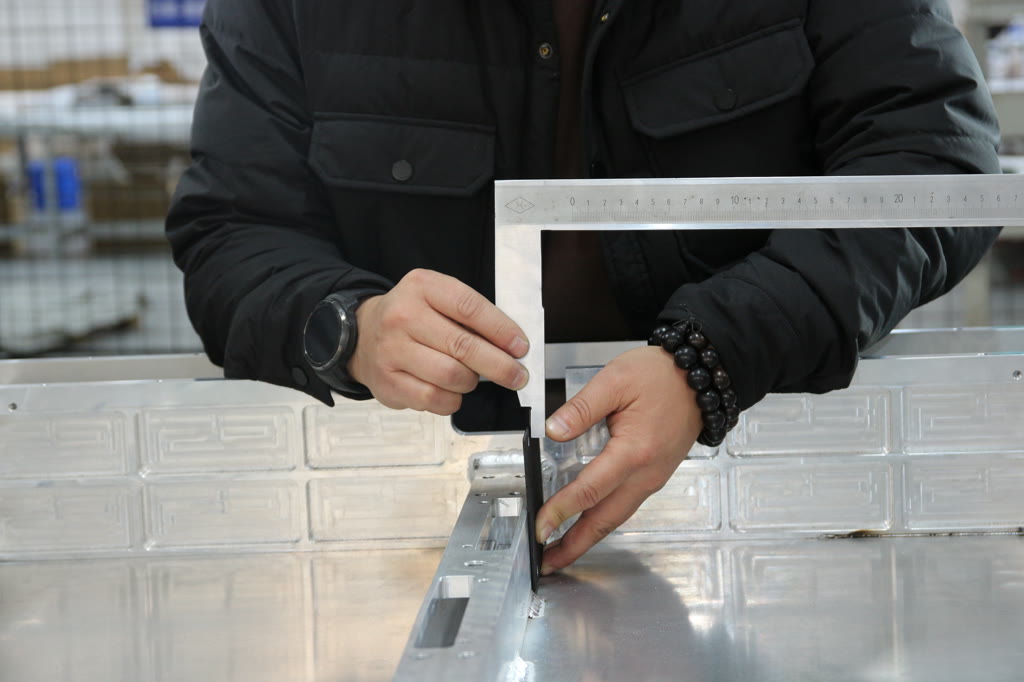
When evaluating a supplier, ask for sample inspection reports. Check whether dimensions are clearly recorded, whether critical features are measured with suitable tools, and whether reports match the drawing revision. This gives you a practical view of the supplier’s quality discipline before you commit to production.
CNC machining DFM support is one of the clearest signs that a supplier understands manufacturing, not just cutting. Design for Manufacturability review helps identify features that may increase cost, lead time, or quality risk before production starts.
Common DFM issues include deep narrow pockets, thin walls, sharp internal corners, difficult-to-machine undercuts, excessive surface finish requirements, and unnecessary tight tolerances across non-critical dimensions. A strong supplier will not simply reject the design. They will explain the issue and suggest practical alternatives, such as increasing corner radii, adjusting wall thickness, changing a tolerance zone, or modifying a surface finish requirement.
This support is especially valuable for product designers and engineers who are developing new parts. Early DFM feedback can reduce machining time, improve part stability, and prevent multiple rounds of sampling. In many projects, a 30-minute DFM review can save days of production delay.
CNC machining lead time depends on material availability, part complexity, tolerance level, finishing requirements, inspection requirements, and production quantity. A supplier that gives the same lead time for every project may not be evaluating the work carefully.
For simple prototype parts, rapid cnc machining can often be completed within a few business days after drawing confirmation and material readiness. More complex parts, tight tolerances, special materials, or surface treatments may require longer. Low volume cnc machining projects usually need flexible scheduling because quantities can change after testing or design validation.
Procurement teams should evaluate both speed and capacity. Can the supplier handle urgent prototypes and still support repeat orders? Can they manage multiple part numbers in one project? Can they scale from 10 pieces to 500 or 2,000 pieces if the design is approved? These questions matter when selecting a long-term cnc machining service provider.
| Project Type | Typical Lead Time | Key Variables |
|---|---|---|
| Simple prototype | 3–7 business days | Material stock, part complexity, drawing clarity |
| Precision prototype | 7–12 business days | Tolerance, inspection, setup complexity |
| Low-volume production | 10–20 business days | Quantity, finishing, batch inspection |
| Repeat production | Project-based schedule | Forecast, capacity planning, packaging, export logistics |
A professional cnc machining quote should be clear enough for buyers to understand the main cost drivers. Price is influenced by material, machine time, setup quantity, tolerance level, surface finish, inspection needs, packaging, and shipping. When a supplier cannot explain why one part is expensive, it becomes difficult to optimize the project.
Cost transparency does not mean the supplier must reveal every internal calculation. It means they can explain what changes would reduce cost. For example, relaxing a non-critical tolerance, changing material from 7075 to 6061, increasing corner radius, or accepting a standard surface finish may reduce machining time and inspection effort.
Communication is equally important for global OEM buyers. For projects shipped to Europe, Australia, and North America, English communication, drawing revision control, fast technical clarification, and structured project management can prevent misunderstandings. STARWAY MFG GROUP works with international OEM customers and focuses on clear communication from quotation through delivery.
| Evaluation Factor | Recommended Weight | Why It Matters |
|---|---|---|
| Quality capability | 35% | Prevents rejected parts and assembly failures |
| Delivery reliability | 25% | Protects launch schedules and production planning |
| Engineering support | 20% | Reduces risk through DFM and process feedback |
| Cost competitiveness | 15% | Controls budget without sacrificing reliability |
| Communication | 5% | Keeps projects moving with fewer delays |
CNC machining at STARWAY MFG GROUP.
Before choosing a cnc machining supplier, use this checklist during quotation review. It helps engineers and procurement teams compare suppliers beyond unit price.
Choosing the best cnc machining companies for your project is not about selecting the cheapest quotation. It is about finding a supplier that can deliver the right balance of precision, cost, lead time, engineering support, and communication. For engineers and procurement buyers, the strongest supplier is usually the one that identifies risks early and helps improve the project before production begins.
The seven criteria in this guide—capabilities, tolerance control, material expertise, quality systems, DFM support, lead time, and cost transparency—provide a practical framework for evaluating reliable cnc machining services. When these areas are strong, buyers can reduce rework, shorten development cycles, and build a more stable supply chain.
STARWAY MFG GROUP provides custom cnc machining services, rapid prototyping, sheet metal fabrication, injection molding, and assembly for global OEM customers. If you need a technical review or want to get a cnc machining quote for your next project, our engineering team can help you evaluate drawings, materials, tolerances, and production requirements.
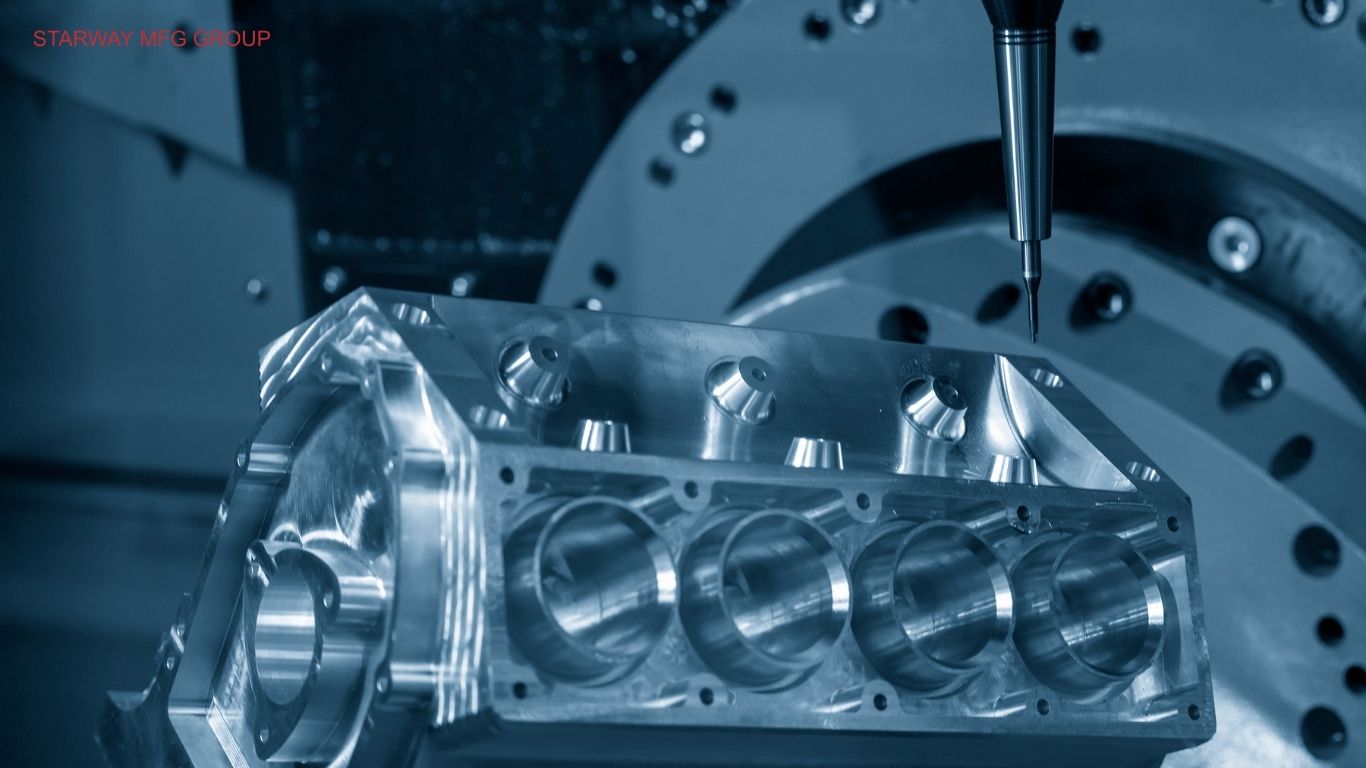
Axis count decides which geometries are possible in one setup, and every extra setup adds tolerance stack-up.
Choose a CNC machining company by evaluating machining capabilities, tolerance control, material knowledge, quality systems, DFM support, lead time, cost transparency, and communication. Do not rely only on the lowest quote.
CNC machining services cost depends on material, part complexity, tolerance level, setup time, machine time, finishing, inspection requirements, and quantity. Simple aluminum parts may be relatively economical, while tight-tolerance stainless steel or 5-axis parts cost more.
Typical CNC machining tolerances are around ±0.05 mm for standard parts. Precision features may reach ±0.01 mm, and selected critical dimensions can reach ±0.005 mm under controlled conditions with suitable material, geometry, fixturing, and inspection.
Look for a supplier with suitable machines, experienced engineers, clear DFM support, material expertise, ISO-style quality control, reliable inspection reports, transparent quotations, and responsive communication.
Simple CNC prototype machining may take 3–7 business days after drawing confirmation and material readiness. Precision prototypes, special materials, surface treatments, or low-volume production may take 7–20 business days or longer depending on scope.
ISO 9001 is one of the most useful certifications for CNC machining suppliers because it shows that the company follows a documented quality management system. For some industries, buyers may also request material certificates, FAI reports, RoHS, SGS, or customer-specific documentation.
Yes. CNC machining is well suited for low-volume production because it does not require dedicated tooling like injection molding or die casting. It is often used for prototypes, bridge production, spare parts, and custom industrial components.
Common materials include aluminum 6061, aluminum 7075, stainless steel 304, stainless steel 316, carbon steel, brass, copper, titanium, ABS, POM, nylon, PC, acrylic, and PEEK.
Yes. A supplier with strong DFM support can suggest changes such as relaxing non-critical tolerances, increasing internal radii, changing material grade, simplifying setups, or selecting a more practical finish to reduce cost without hurting performance.
You can contact STARWAY MFG GROUP for engineering review, material suggestions, tolerance feedback, and quotation support. To learn more about our capabilities, visit our cnc machining services page.
Machined Parts We Produce
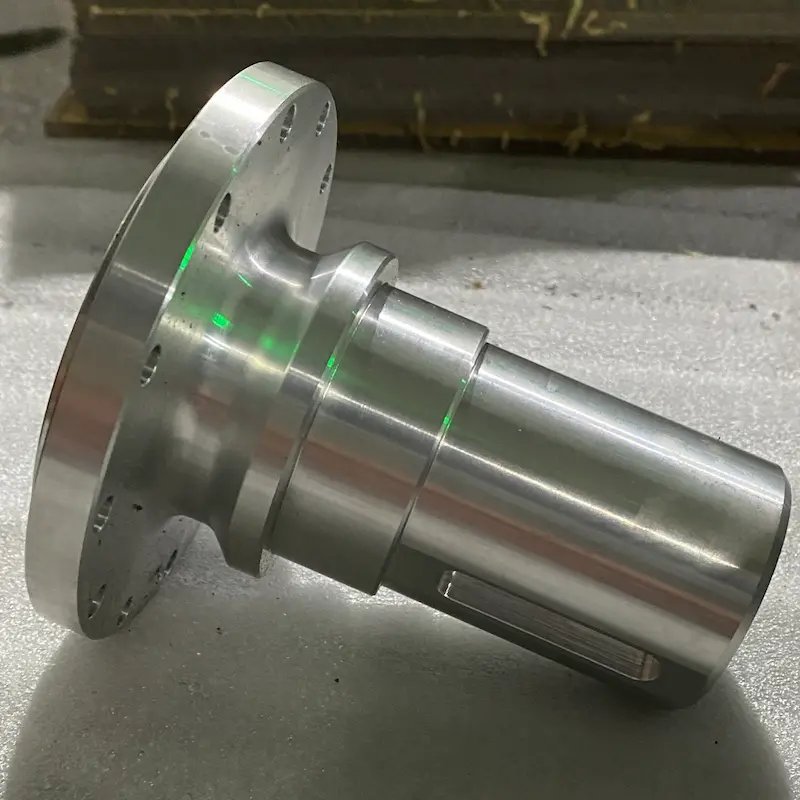
Machined Shaft |
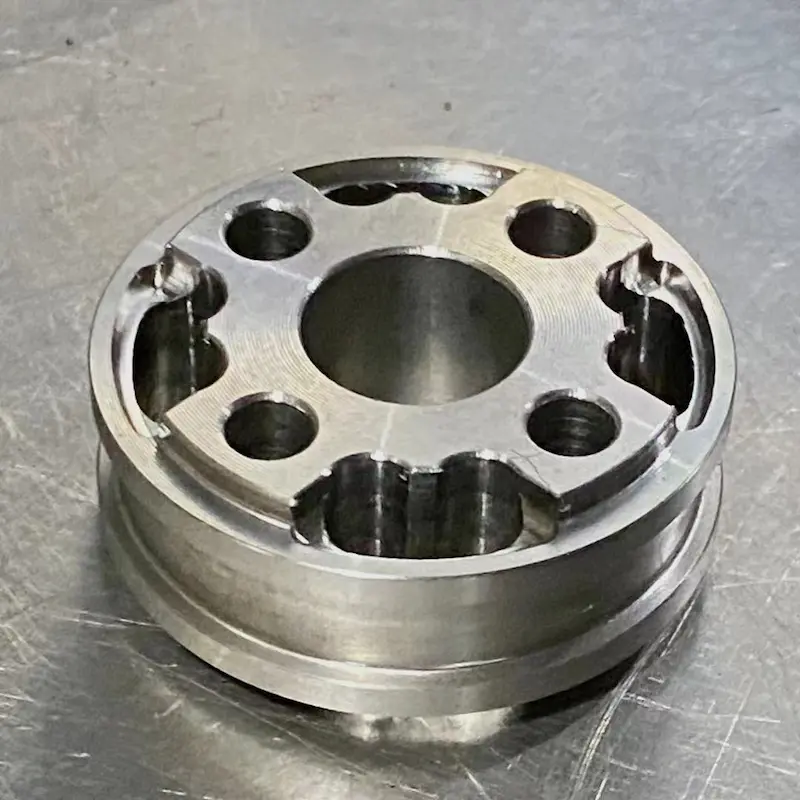
Machined Hub |
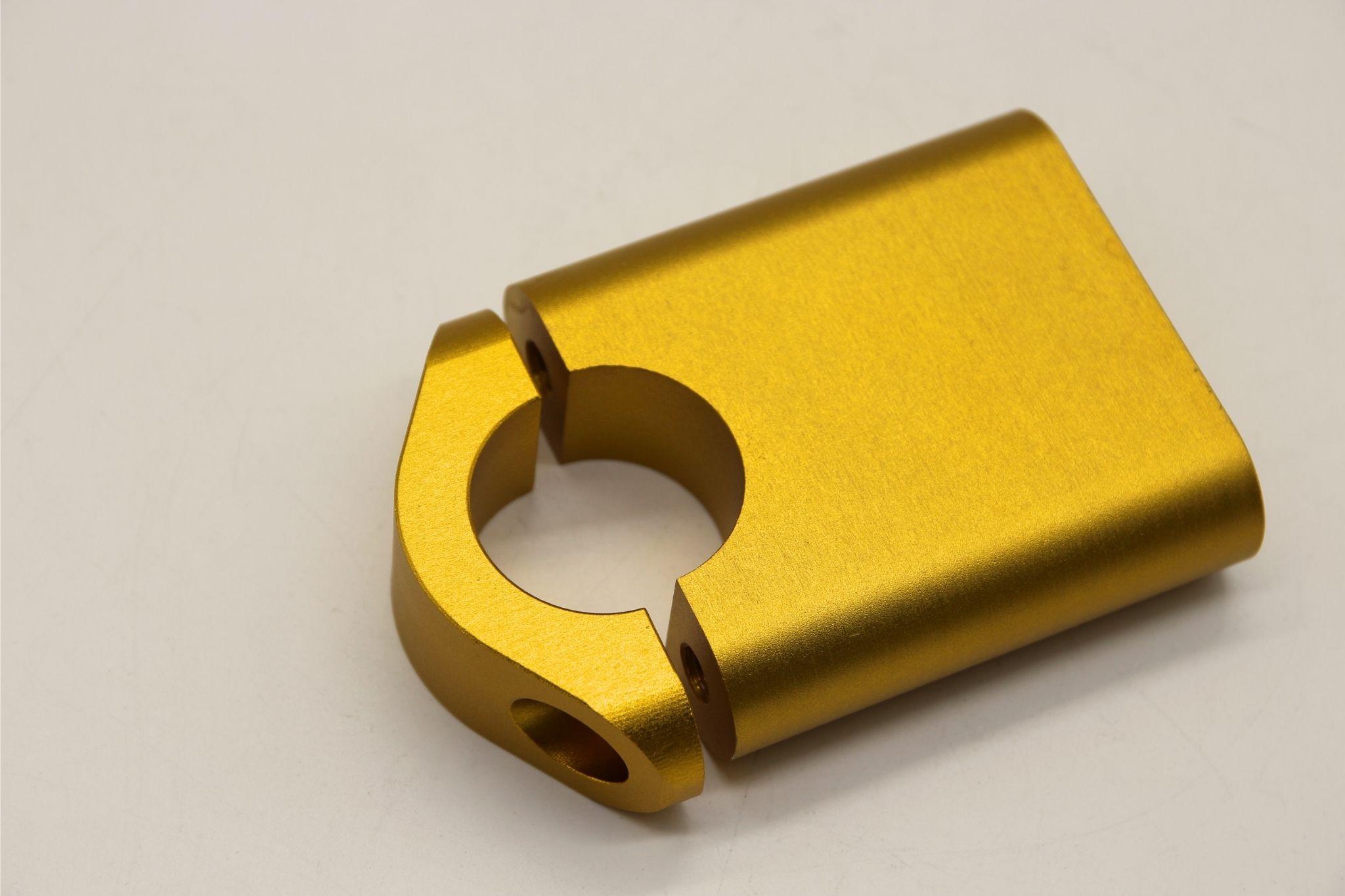
Anodised Bracket |
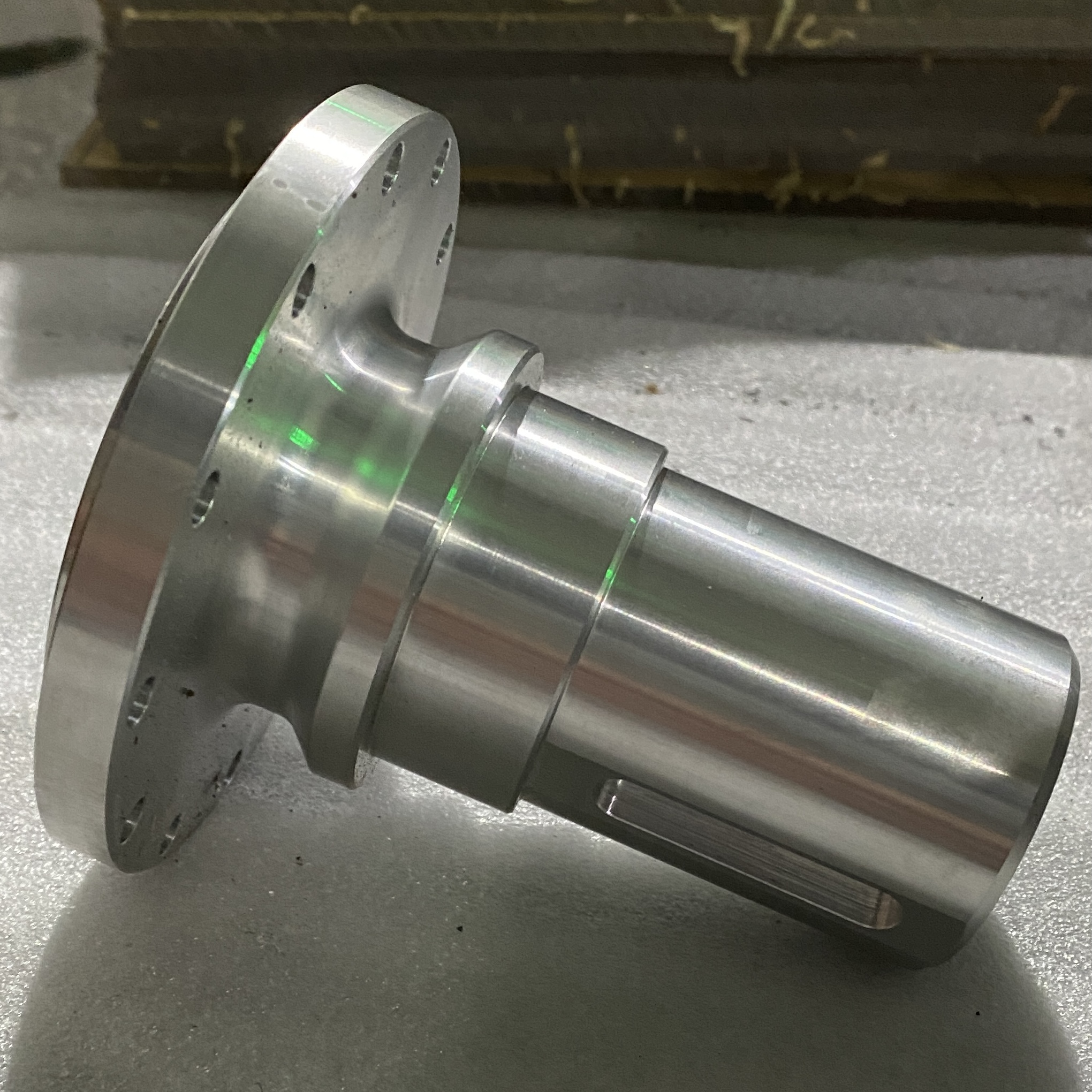
Machined Flange |
Ready to discuss your project?
Send us your drawings and requirements. You will receive a free DFM review, a quotation, and a realistic lead time from our engineering team.



This website uses cookies to provide you with a personalized browsing experience and analyze website traffic. By clicking "Accept", you agree to our use of cookies.


 Global