
Sheet Metal Fabrication Design Engineering Project management Assembly Packaging Rapid Prototyping Shipping & Delivery
CNC Machining Design Engineering Project management Assembly Packaging Rapid Prototyping Shipping & Delivery
Plastic Injection Molding Design Engineering Project management Assembly Packaging Rapid Prototyping Shipping & Delivery
SUS304 vs SUS316L is one of the first material decisions when designing precision sheet metal enclosures, brackets, or structural chassis. Stainless steel is widely selected for its mechanical strength, durability and corrosion resistance, but the grade you specify directly affects cost, weldability and long-term performance.
Nevertheless, custom sheet-metal projects frequently face two common engineering risks:
| Property / Alloy Element | SUS304 (06Cr19Ni10) | SUS316 (06Cr17Ni12Mo2) | SUS316L (022Cr17Ni12Mo2) | Engineering Significance |
|---|---|---|---|---|
| Chromium (Cr) | 18.0% – 20.0% | 16.0% – 18.0% | 16.0% – 18.0% | Forms the primary protective Cr2O3 passive layer |
| Nickel (Ni) | 8.0% – 10.5% | 10.0% – 14.0% | 10.0% – 14.0% | Stabilizes the austenite phase; enhances acid resistance |
| Molybdenum (Mo) | — | 2.0% – 3.0% | 2.0% – 3.0% | Essential for resistance against chloride pitting & crevice attack |
| Carbon (C) | ≤ 0.08% | ≤ 0.08% | ≤ 0.03% | Ultra-low carbon in “L” grade prevents carbide precipitation during welding |
| Tensile Strength | ≥ 520 MPa | ≥ 520 MPa | ≥ 480 MPa | Defines overall structural load-bearing capacity |
| Yield Strength | ≥ 205 MPa | ≥ 205 MPa | ≥ 175 MPa | Base threshold for permanent plastic deformation |
| PREN (Pitting Resistance) | ~18 – 20 | ~23 – 25 | ~23 – 25 | Formula: PREN = Cr + 3.3×Mo + 16×N |
Recommended application scenarios (for reference only):
SUS304: Indoor equipment frames, consumer-electronics assemblies, general food-processing equipment, commercial kitchen components, architectural panels for non-coastal environments.
SUS316: Exhaust manifolds, heat exchangers, valves, pumps, chemical process equipment, sterile storage tanks etc.
SUS316L: Marine salt-spray exposure, pharmaceutical containers, marine exhaust parts, chemical-processing equipment, heavy-duty TIG/laser-welded assemblies without post-weld solution annealing.
★ Cost Saving Tip
DFM Cost-Efficiency Insight: For outdoor enclosures operating in low-salinity industrial environments, SUS304 with passivation per ASTM A967 can often satisfy corrosion requirements and lower material costs compared with SUS316L. Note: passivation improves but cannot equal the chloride resistance of SUS316L; high-salinity coastal scenarios still require SUS316L.
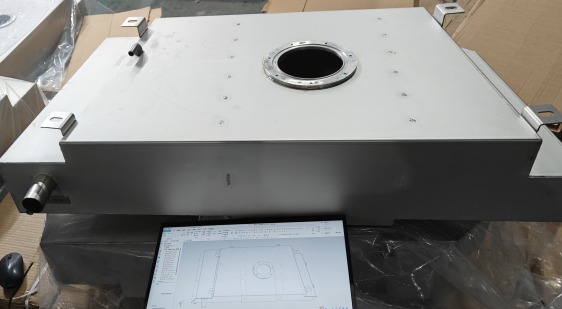
Stainless steel sheet metal enclosure |
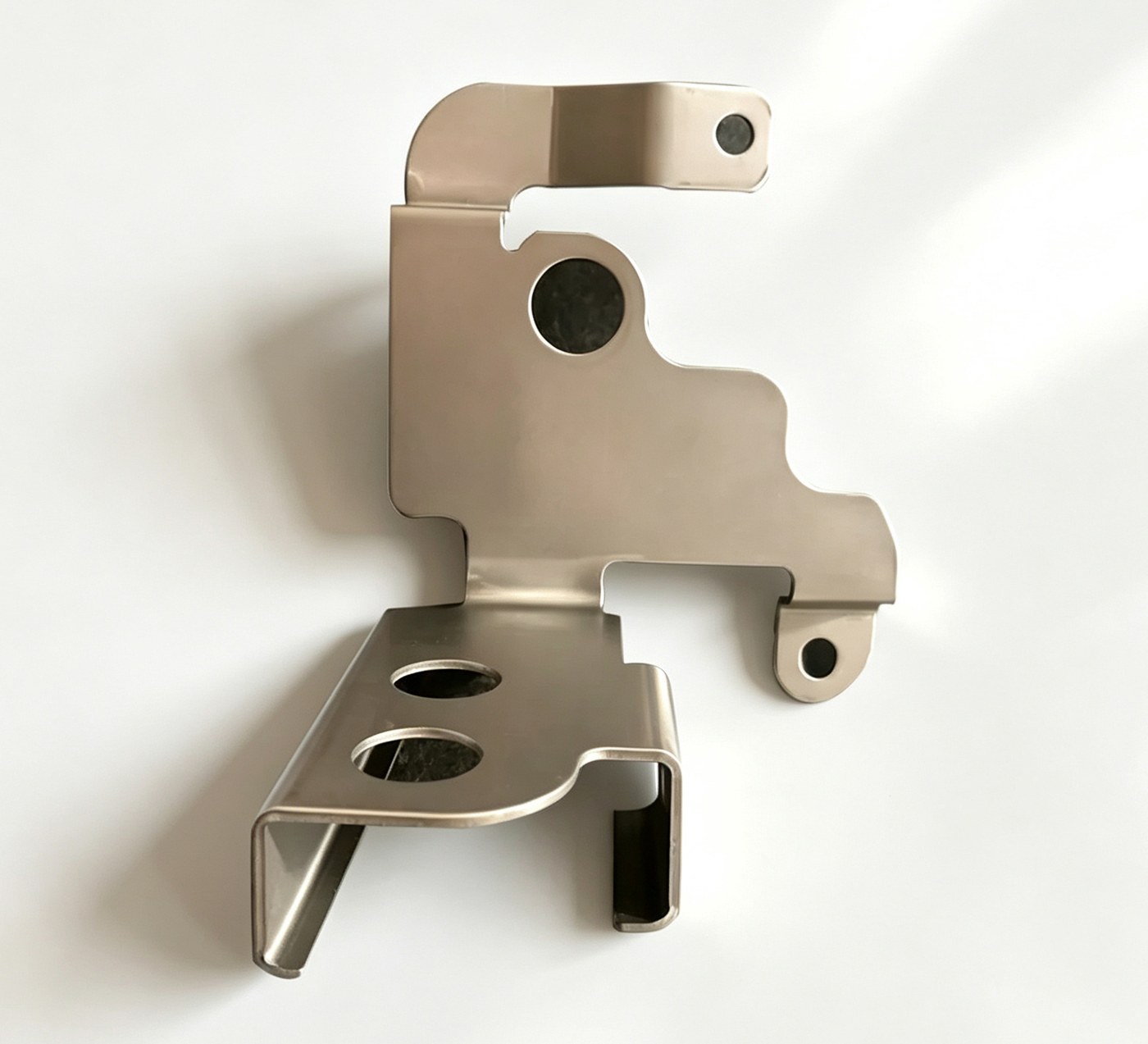
Multi-bend stainless steel bracket |
Values below represent typical workshop empirical ranges, subject to material hardness, tooling and process parameters.
1. Higher Tonnage Demand (Factor ≈ 1.5×): Due to high initial tensile strength and rapid work hardening, the bending force required for stainless steel is approximately 1.5 times that of ordinary carbon steel of identical thickness: F(Stainless) ≈ 1.5 × F(Mild Steel). Example: Bending a 4.0 mm thick, 2.0 m long plate typically demands ~64 tons for mild steel, but jumps to ≥96 tons for SUS304/316L.
2. Significant Elastic Recovery (Springback Δθ): Austenitic grades possess a high strain hardening exponent (n ≈ 0.45). When the press brake punch retracts, the elastic energy stored within the outer tensile fibers causes a springback of 2.5° to 5.0° (and up to 6°–8° on large radius bends), compared to only 0.5°–1.5° for mild steel.
★ Engineering Verification Checklist
Working on an enclosure or structural bracket in 304 or 316L?
Share your STEP files for a DFM feasibility and springback review.

This website uses cookies to provide you with a personalized browsing experience and analyze website traffic. By clicking "Accept", you agree to our use of cookies.



 Global